Nobody Taught You How to Want the Right Thing
So you hired someone to want it for you. And now you're living in their answer.
She posted on Reddit at eleven at night.
Not angry. That is the part that stays with me. She wasn’t rude, actually, almost apologetic about the whole thing. She had hired a designer. Sent inspiration photos. Written detailed specifications down to the height of the chairs and the placement of the drawers. She had done everything she was supposed to do. The designer had delivered everything they promised.
I feel like they disregarded my ideas, she shared. Then immediately walked it back: I'm not saying they actually did. Just that it feels that way.
That sentiment is the whole story.
She knew the work had been done. She had paid for an expert and received a professional result. The room was finished. She was sitting in it at eleven at night trying to understand why it didn't feel like it was “her.” And she was already apologizing for having the feeling.
I have heard that sentence in different forms from almost everyone who comes to me having already worked with someone else. The room looked right. I just didn't love it. I couldn't say why.
The designer didn't fail her.
The model did.

The model was never built for what she actually needed
Traditional design help was built around an exchange. You arrive with a direction. A professional refines and executes it. The whole system assumes the client's direction is the starting point and the designer's skill is what carries it home.
Reasonable assumption. Wrong in one specific way the industry has never been transparent enough to name.
The direction most people bring to a designer is not actually theirs.
It is a composite. Three years of saved images. Their sister's opinion about the wall paint. The designer they have been following online whose rooms they admire but whose life they don't live. What they believe an intentional home is supposed to look like. And somewhere underneath all of that, buried under every layer of absorbed opinion and secondhand confidence, something true about what they actually need a room to do.
A designer who executes a direction built on that composite produces something that looks considered and feels borrowed. Not through any failure of skill. Because they were handed the wrong starting point and nobody knew it, including the person who wrote it.
What she needed was not someone to execute her direction.
She needed someone to find it first.
Those are not the same service. Almost no one in this industry offers the second one. And the industry has very little financial incentive to tell you they're different.
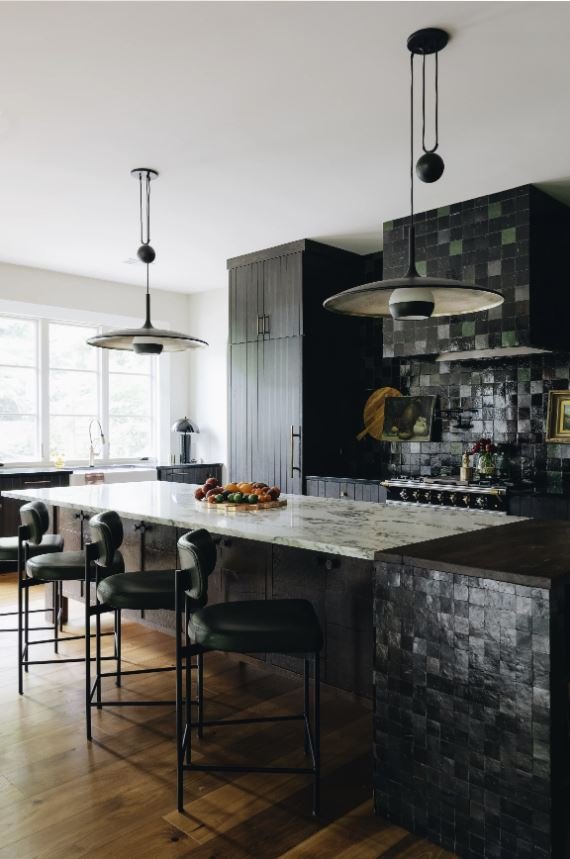
Image | CleTile
What I stopped doing and why
I used to work the traditional way. I was good at it. Rooms came together. Clients said thank you.
Then they called me months later, second-guessing the sofa.
Every time. Not always the sofa. But always the same shape: I thought I loved it. Now I'm not sure. Maybe it's the rug.
It was never the rug.
I spent a long time trying to understand what I was doing wrong. Better intake questions. More thorough conversations before anything got ordered. Longer sessions, more detail, more care.
The rooms kept coming together. The calls kept coming.
Eventually I had to be honest with what I was actually seeing. I was solving the visible problem. The invisible one, the direction that had been assembled from everyone else's taste and every opinion the client had absorbed and called her own, was still running. It would keep running regardless of how well I executed it. Because the execution was never the issue.
The issue was that my clients didn't know what they wanted in a way that was theirs. Not because they lacked taste. Because nobody had ever helped them separate their own signal from the noise that had been building since the first time someone told them their instincts were off.
I stopped trying to execute directions and started trying to find them.
That is the entire difference.
It took me longer than I am comfortable admitting to understand those were two different jobs.

Image | Houseofbeautiful
What finding a direction actually looks like
It starts before the room.
I ask about a closet.
About the chair nobody sits in.
About the corner people avoid without examining why.
About the things that moved through three apartments without ever being questioned.
These are not warm-up questions. They are the whole point. I have had clients describe, in the same session, a side table they bought because it looked right and a table they have owned for eleven years without ever questioning it. The first one they can justify in detail. The second one they reach for without thinking. The second one is always the answer.
The first one is almost always the noise.
Research on the psychology of ownership has established for decades that our possessions are extensions of who we are.
What you reach for without thinking, what you kept through every move without examining why, what you have been drawn to consistently across years of changing your mind about everything else — that is not sentiment.
That is the most accurate picture of your taste that exists anywhere. Most designers never look at it. They look at your inspiration boards instead. Inspiration boards are what you wish you wanted. Your closet is what you actually want.
The distance between those two things is where rooms go wrong, quietly, in the specific way that produces finished spaces that feel like a better-organized version of someone who is almost you.

Image | Veranda
The question nobody asks before they start
Before any decision about any room, one question is worth sitting with.
Not what do I want this room to look like?
That question produces answers from the outside in.
Other people's rooms.
Reference images.
The visual layer, which is the last layer, not the first.
The question that produces something real is: what does this room need to do for the person I actually am right now?
Not the version of you with more time or a different budget or a cleaner relationship to Tuesday evenings. The actual current version. The one who comes home from a day that asked too much of her and needs somewhere to land before anyone asks anything else.
When you answer that question honestly, the visual choices stop being a selection problem. They become a recognition problem. You are no longer choosing from an infinite field of options. You are looking for the things that match something you already know.
That is a fundamentally different activity.
It produces fundamentally different rooms. Not more expensive. Not more sophisticated. Just more yours.

Image | Decoist
Why access and expertise are not the point
The design industry sells access.
Trade vendors.
Materials you cannot source yourself.
A professional eye trained to see what you miss. Those things are real. If you want trade-quality pieces at prices retail customers cannot reach, a designer with that access is genuinely valuable.
Once you complete your Done Moves through Design Mood or Mindful Home Creator, that access opens to you directly, which is worth knowing. But access applied to the wrong starting point produces expensive rooms you don't love.
Expertise executed against a direction assembled from other people's taste produces rooms that look like they were made for someone else. Because they were.
What changes everything is not the quality of what gets sourced or specified. It is the quality of what came before any of that. A direction that is actually yours, separated from the accumulated weight of everyone else's opinions and your own long history of talking yourself out of what you already knew, executes differently.
Every decision made from that place holds. Not because it is objectively correct. Because it is yours in a way that borrowed choices never are. And borrowed choices, however well executed, are what keep rooms in that particular purgatory where they are done but never finished.

Image | Fourhands
What design help is actually for
Not to give you a room.
To give you the clarity that makes the right room possible. Not to replace your taste with a professional's. To help you find where your taste has been all along, under every layer of doubt and deferred judgment and other people's certainty. Not to tell you what to choose. To help you become the kind of person whose choices stop asking to be reconsidered. Not to hand you a finished room and leave. To hand you the conversation you needed to have with yourself before any room could be finished correctly, your way.
The M.I.N.D. Method exists because I got tired of watching capable designers fail good clients not through incompetence but through a model that was never built for what the client actually needed.
You cannot solve a self-trust problem with a mood board. You cannot close a decision that was never properly opened. You cannot produce a room that feels like someone when that person has never been asked what she actually thinks, separate from what she has been told she should think.
That is the work.
The rest is sourcing.

Image | FourHands
If you have worked with a designer and left with a room that looked right and felt wrong, you were not the problem. The conversation that needed to happen before anything got specified just never did.
It is a two-hour conversation.
It is available now.