The Color Decision that Keeps Reopening Isn't About the Color
Sarah Jo of SJA Interiors knew this before I had words for it.
You have stood in front of that wall in the morning light. In the afternoon. Under the lamp at 9pm when the light is completely different and somehow that feels like relevant data.
You have repainted it in your head more times than you've repainted it in real life.
And the decision is still open.
Here is the thing about color that nobody says plainly: the paint is rarely the problem. The problem is that a color choice made without accounting for light, for the materials already in the room, for how the space actually gets used, is not really a decision. It's a guess wearing the clothes of a decision. And guesses don't settle. They just go quiet for a while before they reopen.
Sarah Jo of SJA Interiors has spent fifteen years working at the intersection of color analysis and lived experience. Her work focuses less on picking a shade and more on understanding why a choice feels settled in one home and restless in another. I asked her to walk through the real reasons color decisions stay open, because this comes up in almost every session I do, and almost never in the way people expect.
As you read, notice where your own color decisions tend to reopen. That's where the real work is waiting.

Image | Sarah Jo from SJA Interiors
Color carries more than preference
Sarah: Like many people, color has fascinated me from an early age and I have always had strong opinions and feelings about color. When I was studying interior design at university, we learned about the psychology of color and how it affects human perception and emotions. I wrote my color theory thesis on the psychological effects of paint color perception in interior spaces. I am highly sensitive to colors and have spent years studying and perfecting my color analysis methods. About three years ago, I began offering color consultations as part of my firm’s interior design services.
What this means practically: the color you keep second-guessing isn't failing you. It's carrying something you haven't fully named yet. When a color choice keeps reopening, it's worth asking what the room is supposed to feel like to be in, not just look like. Those are different questions with different answers.
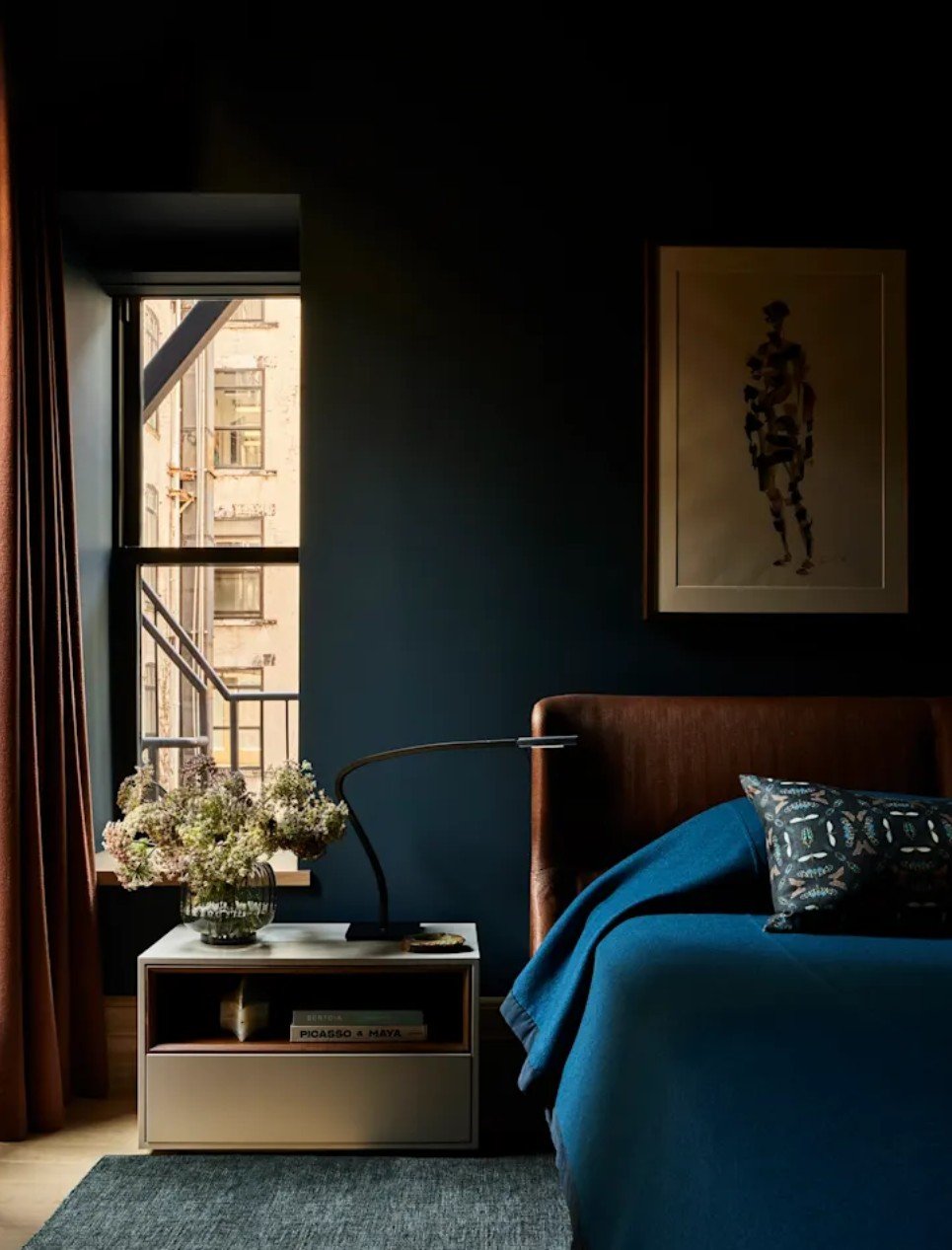
Photo: Nicole Franzen
Design: Kate Taylor Interiors
Styling: Darwin Fitz
Why the same color reads differently in every room
Sarah: There is an overwhelming consensus in the scientific community that there is a correlation between color and human emotion. Color is a powerful media through which to express or influence emotions, especially in interior design. The hue (color itself), value (light or dark), and intensity of colors can influence mood, attention, distance, size, and perceived temperature of a space.
In general, warm colors are stimulating while cool ones are quieting. Black, white, and grays evoke a subdued response. In terms of value, the lighter a color is, the cheerier the mood where as darker colors evoke restfulness. If a color has high intensity, the mood is stimulated, whereas low intensities bring a feeling peace. Warm hues attract more attention while cool hues attract less— extreme values attract more attention as do colors with high intensities.
Colors also affect the perception of distance. Warm hues, dark values, and high intensity colors advance or make a space feel smaller, while cool hues, light values, and low intensities recede making a space feel larger. The perceived temperature is also affected by color in that warmer hues make people feel warmer and cooler hues make them feel cooler.
As an interior designer, I am always intrigued by people’s emotional responses to their surroundings. I know that the colors I select for an interior can affect my client’s emotional experience of that space. Some colors that are pleasing to one client may be the opposite to another. An interior designer is responsible to make sure the colors that he or she selects are harmonious not only with each other, but also with the client’s lifestyle and personality.
This is why swatches lie. A color swatch is a controlled sample. Your room is not a controlled environment. It has a direction, a history, a light source that shifts throughout the day, and materials that absorb or reflect everything around them. A decision made from a swatch alone is missing most of its context. That's not a taste problem. That's an information problem.
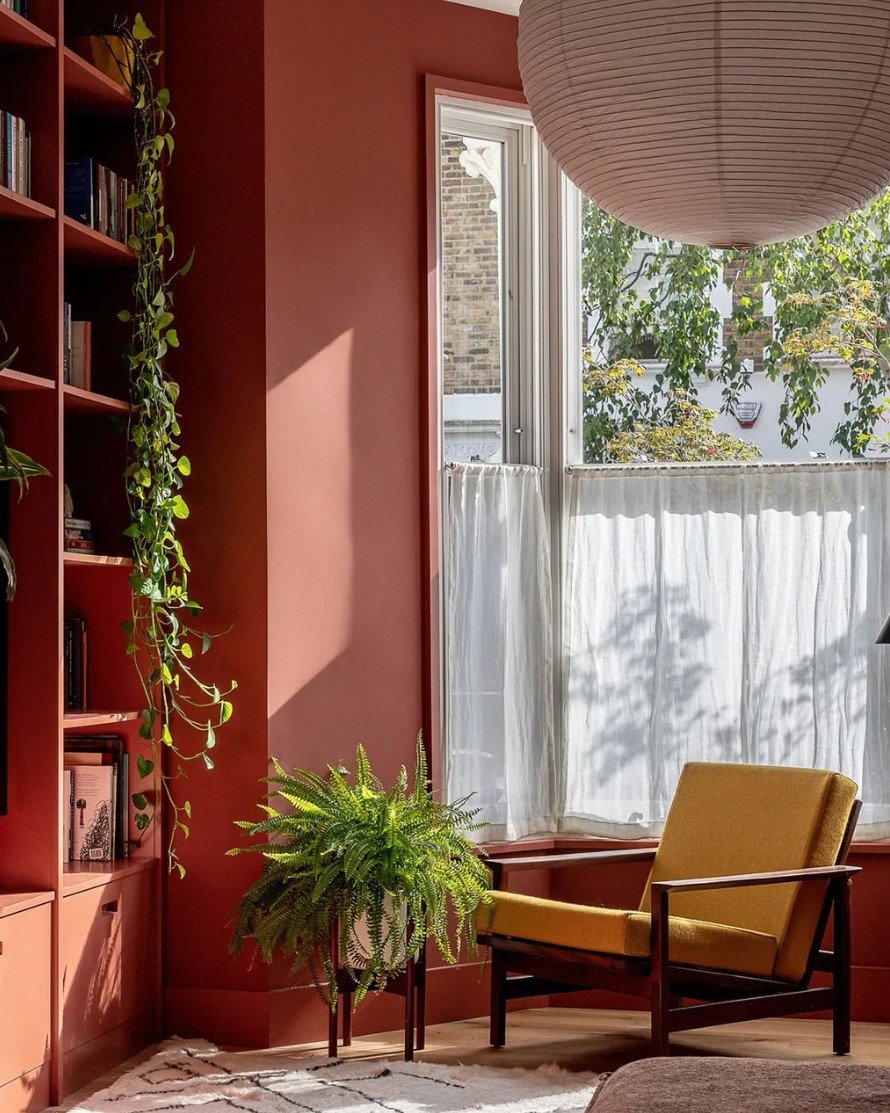
(Image credit: livingetc)
The rules you inherited that aren't actually rules
Sarah: Most of the common myths I encounter in my color consultations revolve around so-called “rules” of interior color, akin to fashion’s “Don’t wear white after Labor Day” rule. Some of these traditional opinion-based rules may sound like, “Dark color shouldn’t be used in large amounts or in small spaces,” or that “bright, saturated colors aren’t appropriate for residential spaces,” or that certain color combinations are to be avoided. I believe that color selection is highly personal and should be a fun and enjoyable process.
Ultimately, if you love a particular color in your space, that’s truly all that matters. Some common mistakes I see are clients not taking into account the way natural and artificial lighting will affect how a paint color is perceived. Also common is clients forgetting to account for how the colors of their furnishings and flooring materials will be affected by a particular paint color and vice versa.
The "rules" about color in interior design function the same way most design rules do: they give people something to defer to when they don't yet trust themselves. That's the whole business model of a rule. And the cost is that decisions made from rules instead of from knowing tend to reopen the moment the rule gets questioned.
If you love it and it works in your specific light with your specific materials, no rule has anything useful to add.
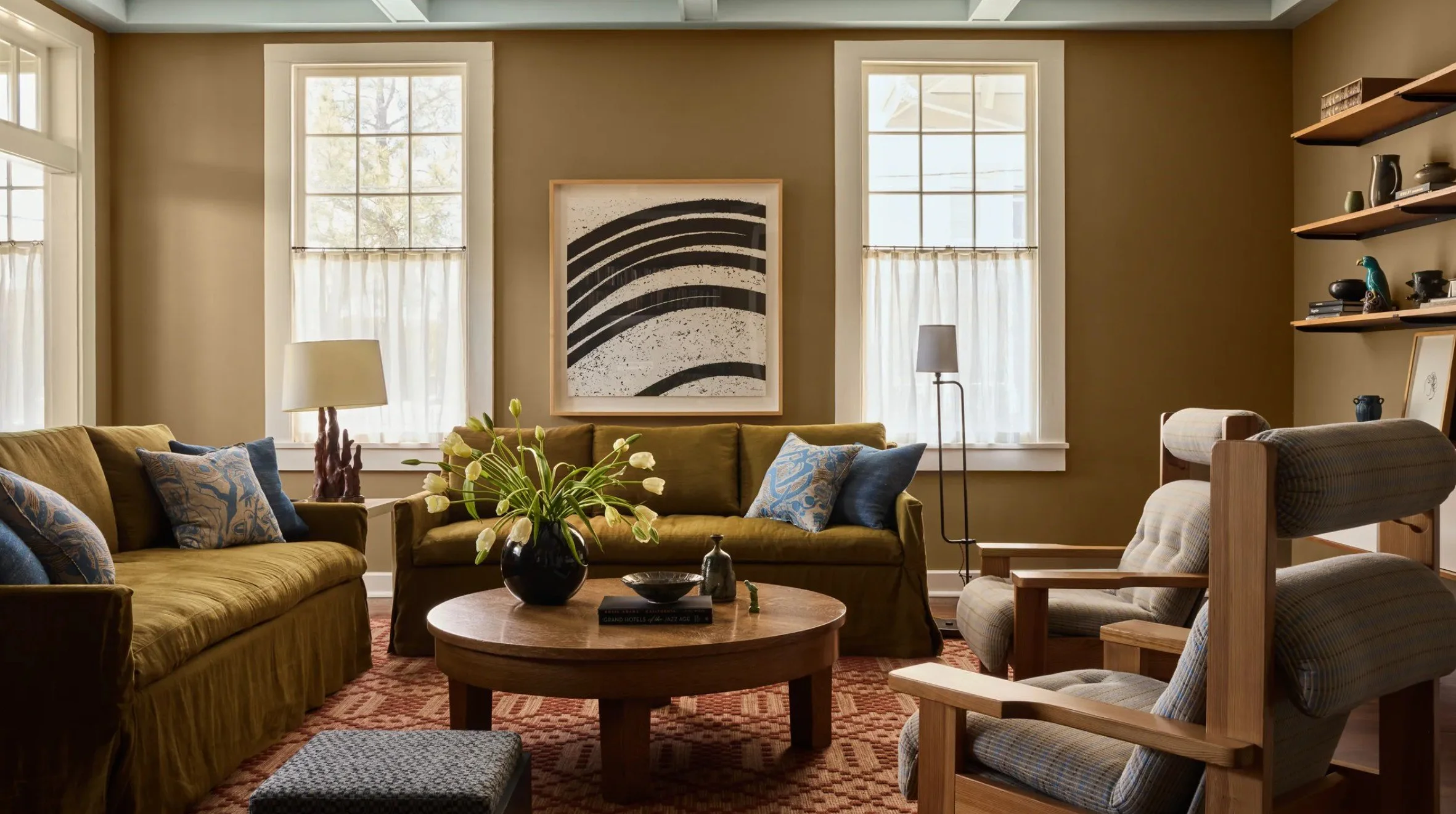
Image: architecturaldigest
When you're too overwhelmed to start
Sarah: When I have a client who feels exasperated by color selection, I begin with a simple visualization exercise to help them get their creativity flowing. We then turn to inspiration images which are an absolute must for indecisive clients. Once we have a general idea of a color family or overall style, we can begin to look at specific colors and gauge my client’s emotional response to those colors. From there, it’s usually quick work creating a paint palette that they love.
The visualization exercise Sarah describes works because it bypasses the part of the brain that is trying to make a permanent decision and gets to the part that already knows what it wants. Most color overwhelm is not actually about color. It's about the weight of getting it wrong in a room you have to live in. Reducing that weight, even slightly, is usually enough to let the real preference surface.
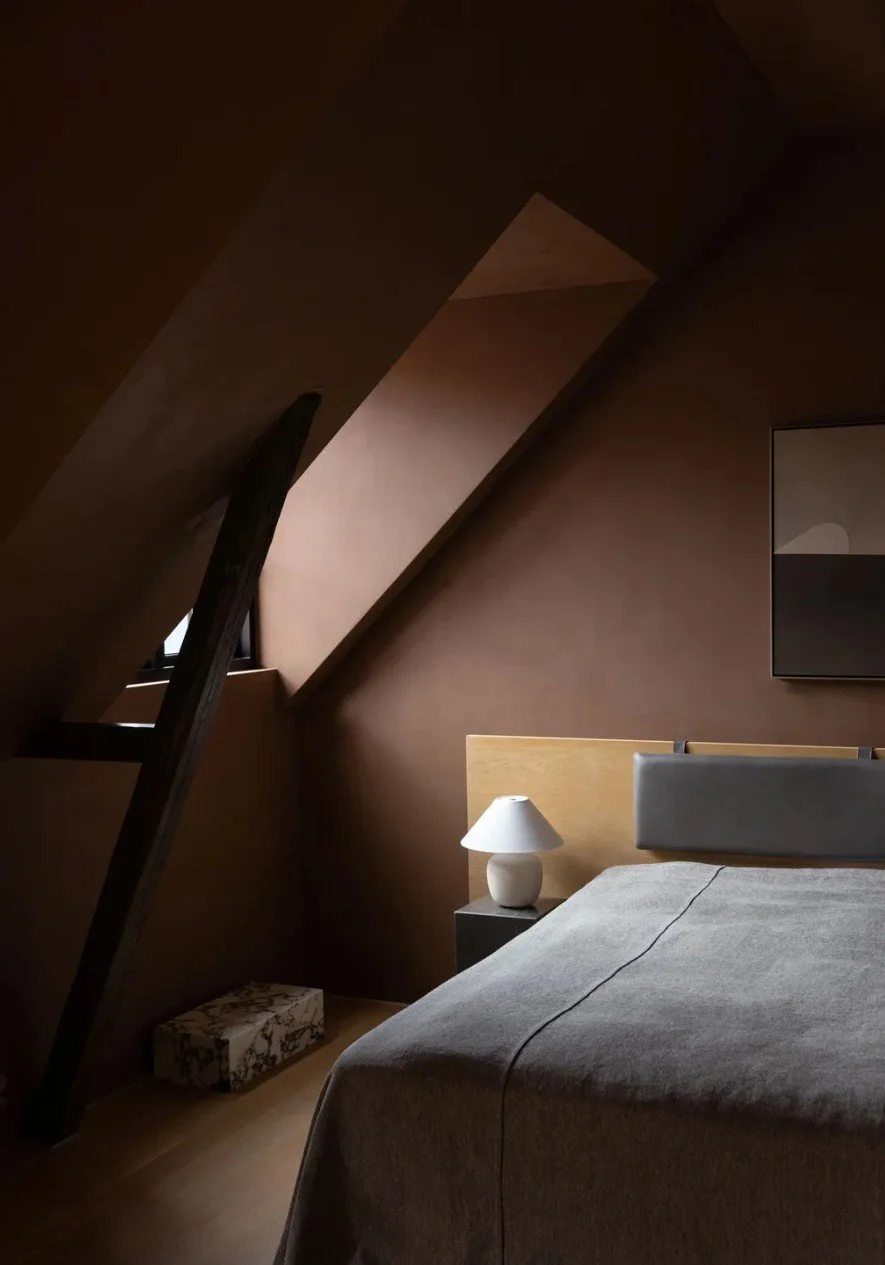
Image: livingetc
The framework that supports clarity without replacing it
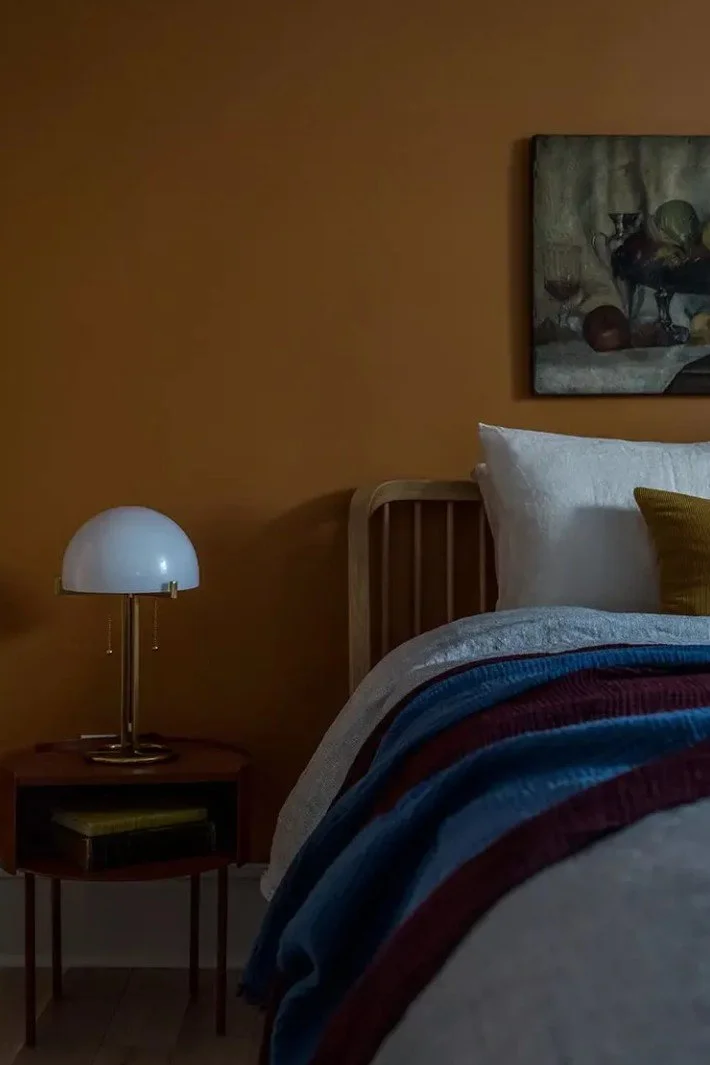
Sarah: Obviously white is a universally accepted paint color for many homes. White is timeless, can coordinate with anything. But that being said, there are thousands of whites to choose from such as a warm white with yellow undertones, a cool white with blue undertones or balanced between warm and cool. Choosing the right color for any given space is dependent on several factors: the color perception of the inhabitant, the natural and artificial light sources in the space, the size and volume of the space and the furnishings and finishes in that space.
Once you have taken in to account those factors, using the 60-30-10 rule can be helpful when creating a whole-home palette. This means 60% of your home would be your main wall color(s), for example maybe a neutral or soft white in main living areas, 30% of your walls should be coordinating accent colors in secondary rooms such as bedrooms, bathrooms, home office, etc. and 10% of your home will have a pop of color for example, brightly colored powder bath or sleek black cabinetry in a kitchen or at a wet bar.
My custom color palettes were born out of a desire to share my color expertise with a wider audience than just my private clients. I had amassed so much color experience over my 15-year career and I wanted to share everything I had learned with as many people as possible. My goal was to make paint color decisions easier and less intimidating for those who maybe don’t feel as confident in their design instincts and just need a little nudge to go bolder or darker or brighter.
Choosing color for your home shouldn’t be scary, it should be a fun and exciting process and that’s what I hope to bring to people through my palette collection.
A framework is only useful when it's doing what Sarah describes here: supporting clarity, not replacing judgment. The 60-30-10 rule doesn't tell you what colors to choose. It tells you how much of each to use once you've chosen. That's a meaningful distinction. The decision still has to come from you. The framework just gives it somewhere to land.
Image|The Spruce
When color carries something heavier than aesthetics
Sarah: Absolutely. I had a client who had recently received a serious diagnosis. She was in a rush to choose colors for a new home she was planning on living in with (and ultimately leaving behind for) her adult child. She wanted peaceful and soothing colors inspired by the landscape surrounding her home.
She, her daughter, and I worked diligently to craft the perfect palette for this home where they wanted to create lasting memories. Once it was complete, my client said her anxiousness was gone and she felt so at peace knowing this home was complete. She said the vibe of the house felt exactly how she wanted it to and she was so grateful to be able to pass this special gift down to her daughter.
That was one of the most moving and incredible experiences I have ever had with a client.
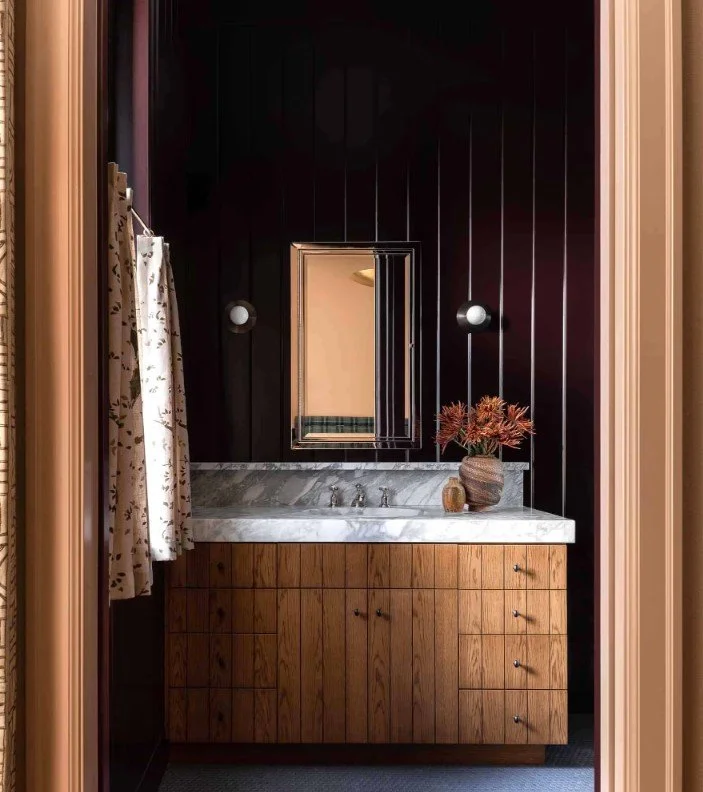
I want to stay with this one for a moment because I have read it four times and it gets me every time. What Sarah is describing is not a color consultation. It's a woman trying to leave something decided and safe and hers for the person she loves most, in the time she had left to do it. The color wasn't the point. Closure was the point. The peace her client felt when it was finished wasn't about the palette. It was about having made a decision she could stand behind completely, with nothing left open.
That is what a settled home feels like. That is what we're working toward in every session. The stakes are not always that clear. But the feeling is always the same.
Image| housebeautiful
Why trends are the last thing to consult
Sarah: I may keep trends in mind in my designs but overall I don’t follow them explicitly. I may draw from a trend that a client is drawn to in order to spark inspiration but ultimately, color selection is a deeply personal process that is unique from client to client. The timeless feeling comes when the client and I find a palette that achieves the vibe they are looking for which then translates into long-term satisfaction with their space.
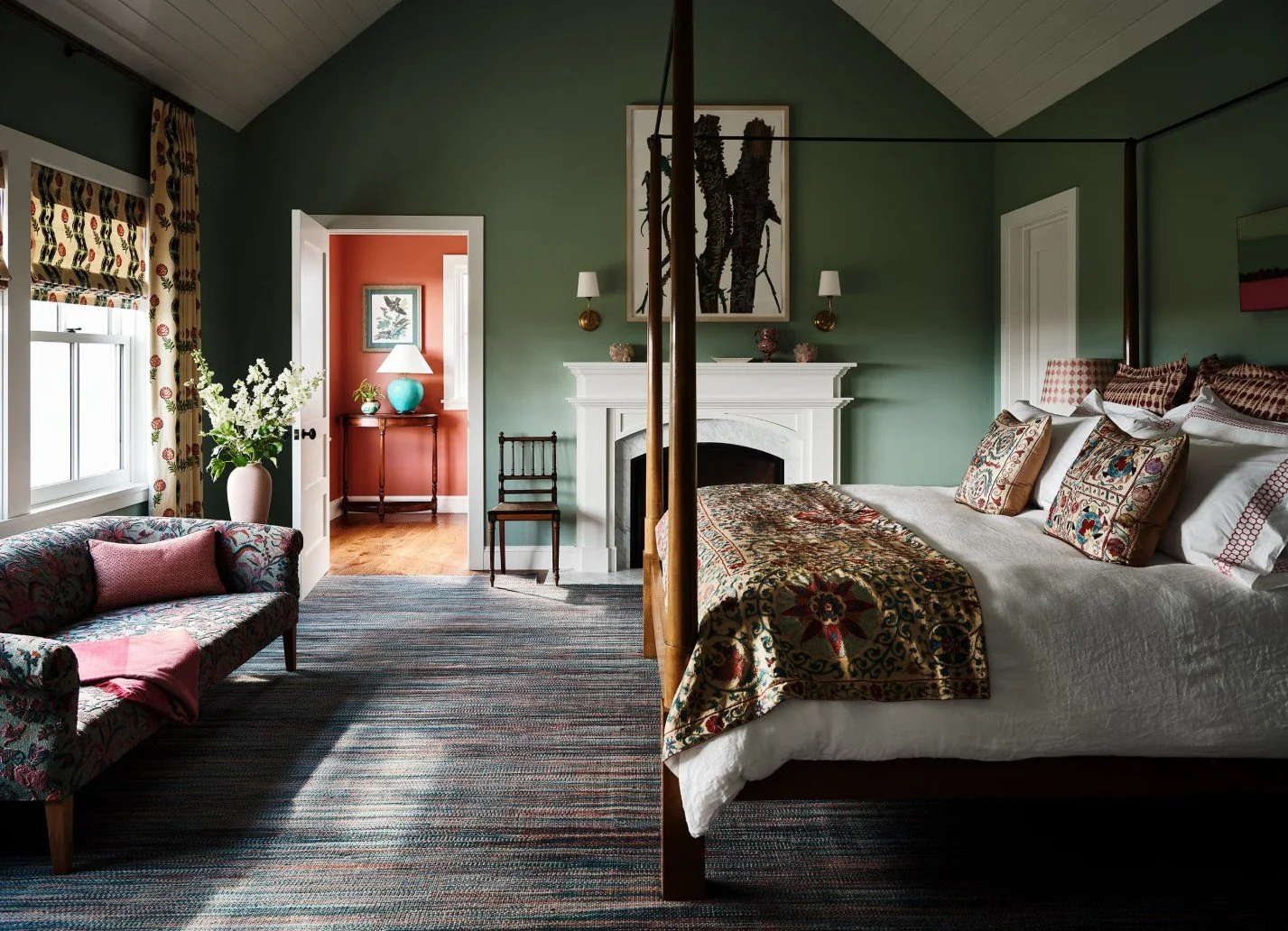
Timeless doesn't mean neutral. It means chosen for the right reasons. A color that was chosen because it was trending in 2022 is going to feel like 2022 in 2027. A color that was chosen because it was right for your light, your materials, your life is going to feel like yours in ten years. Those are different outcomes and they come from different starting points.
Image|Elledecor
How to try a color before the decision is permanent
Sarah: A great way to “try on” a wall color, so to speak, is to use large peel and stick paint swatches available from many paint retailers. Another great tool are the virtual color visualization applications many paint manufactures have where you upload a photo of your space and the color is digitally applied to the walls. Alternatively, you can hire a designer like me to do a color consultation.
As a part of my custom palette projects, I render the paint colors onto your interior walls or exterior surfaces so you have a visual of what the colors will look like in or on your actual home.
The peel-and-stick swatch is one of the most underused tools in residential design. Not because people don't know about it, but because putting a large swatch on the wall and living with it for a week requires tolerating uncertainty for a week. Most people would rather make the decision and move on. The problem is that a decision made to end the discomfort of deciding is not the same as a decision made from knowing. One of them reopens. The other one holds.
What light is actually doing to your color
Sarah explains how directional light affects color perception:
North-facing rooms benefit from warmer or balanced tones
East-facing rooms change throughout the day
South-facing rooms can handle cooler or darker colors
West-facing rooms warm significantly in the afternoon
Artificial light matters too. Bulb temperature and CRI affect how accurately paint reads. Natural light is always the most honest reference.
Artificial light similarly affects color perception. The Kelvin color temperature of a light source casts cool to warm light on surfaces depending on the bulb’s Kelvin value, usually between 2700K and 3000K for incandescent bulbs and 2700K to 6500K for fluorescents and LEDs.
The Color Rendering Index (CRI) of bulbs tells us how well a bulb will show an object’s “true” colors. A paint color will appear “truest” under natural light so a bulb with a CRI closest to natural light, between 90-100, will render the paint color most accurately.
North, south, east, west. These are not decorating preferences. They are facts about your room that determine what color will actually look like on your walls at 7am, at noon, at 6pm under a lamp. A color consultation that doesn't account for light direction is working with incomplete information. So is every decision you've made by holding a small swatch up to a wall for thirty seconds and calling it research.
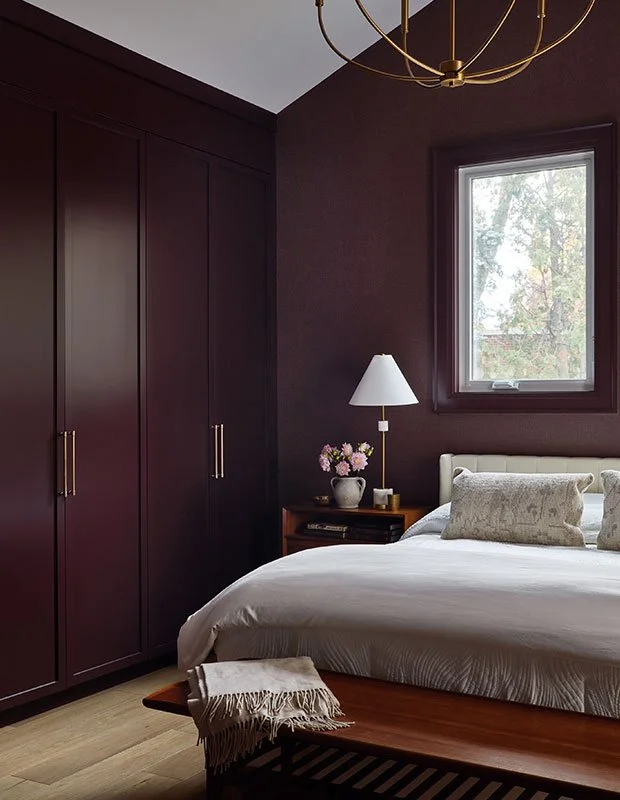
“Bold, gorgeous colors are in and they are not going away anytime soon.
The sad, overall gray palettes of a few years ago are out and in their place come cheery pastels, bright jewel colors and earth tones.”
Photographer: Niamh Barry
Source: House & Home
Designer: Olivia Botrie
On color as expression rather than risk
This rainbow of gorgeous hues opens so many exciting possibilities for interiors from maximalists to minimalists and everything in between and I am here for it! I am also loving how painting ceilings and other unexpected places like trim, is having a moment. Adding color to unexpected places like that is another interior color movement I am fully embracing.
What matters most in this conversation isn’t permission to be bold or subtle.
It’s understanding why color decisions only settle when they’re grounded in context — light, existing materials, and how someone actually lives in a space.
The shift Sarah is describing, away from safe neutrals and toward something more personal, is exactly what happens when people stop choosing for resale value and imaginary future buyers and start choosing for the life they're actually living. Bold isn't the point. Chosen is the point. A pale color chosen with full conviction reads completely differently than the same color chosen because it seemed safe. The room knows.
The decision that finally closes
Color decisions reopen for one reason. Not because the color was wrong. Because something essential wasn't accounted for when the choice was made.
Light. The materials already in the room. How the space actually gets used. What the room needs to feel like to be in, not just to look at. When those things are part of the decision, the decision holds. Not because you got it perfect. Because you got it from the right place.
If you want to go deeper into the color framework Sarah works from, her guide Choosing the Perfect Paint Color: A Comprehensive Guide. It exists to support to support clarity rather than keep decisions open.
And if color is the decision that's been sitting open the longest, that's exactly wh at Design Mood is built for. Two hours. One decision. A filter that makes every one after it faster.