You've Been Running a Taste Experiment for 15 Years
You just never read the results.
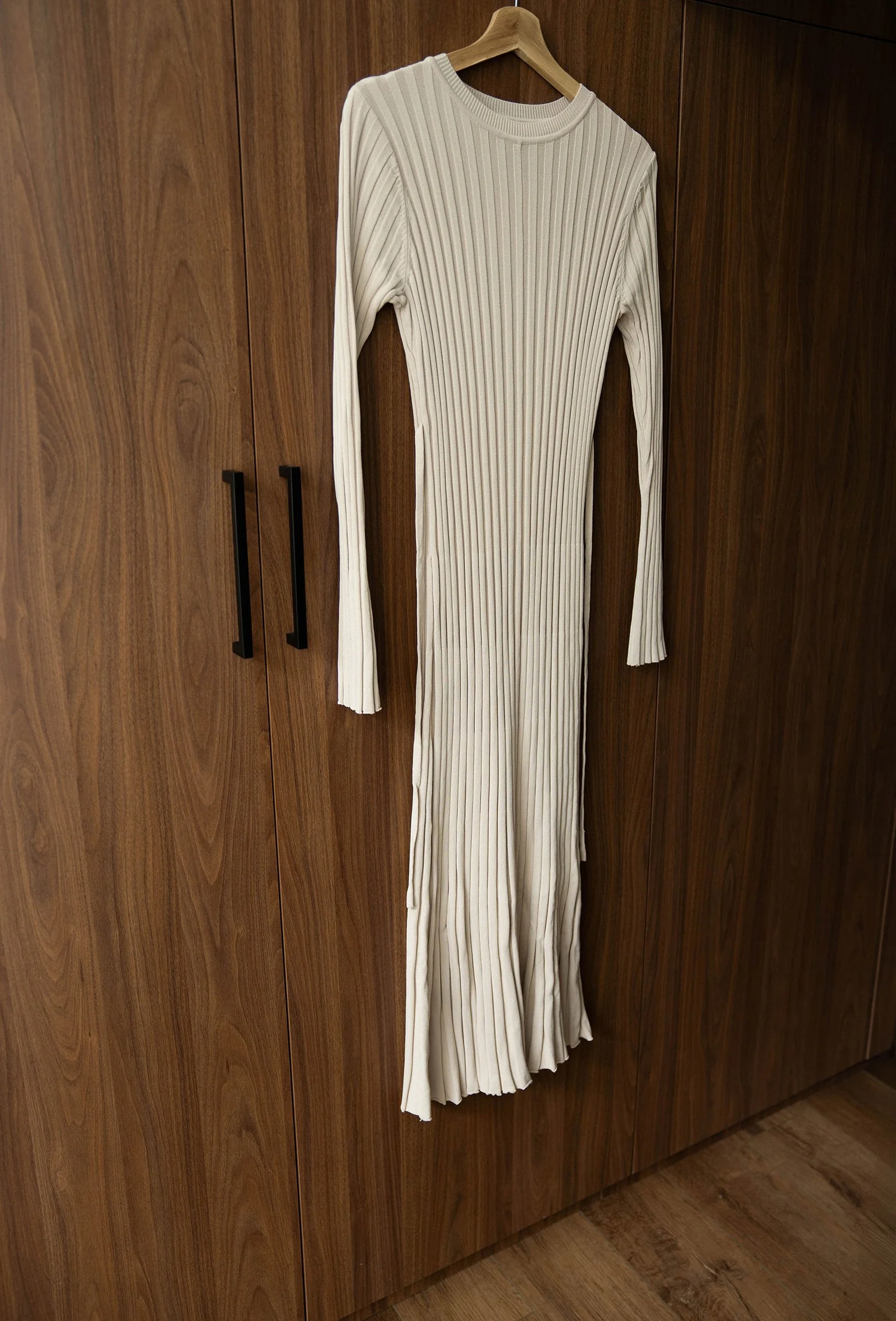
There's a dress in your closet you've worn twice.
You know the one. It looked extraordinary in the shop. You thought about it for two days, went back for it. Then you put it on at home and it felt like a costume.
You've kept it anyway. Getting rid of it means admitting something.
That dress is worth more to your house than every image you've ever saved.
Your boards are a wish list. Every image on them is a room you admired from a distance, at a moment when admiring it was free. You've never saved something and then found out you were wrong about it. There's no Thursday six weeks later where the image turns out to feel like a costume.
Your closet is a different kind of document. It's a purchase history. Every item in it is a decision you made with real money, carried home, and had to live with. A good number of them went badly.
Nothing you got right taught you as much as the dress.
Go stand in front of the closet and sort it into three piles.
What you reach for without deciding. The pieces that survived every move, every purge, every phase. You'd struggle to explain them.
What you bought and abandoned. Worn twice, or never, tag still on.
What's in between. Fine. You put it on when you don't care.
The middle pile is where the truth sits, uncomfortably. Most of it was never chosen for the actual life you're living. It was bought to make you seem like someone. More interesting. More relaxed. More like the person whose life you'd been watching.
You bought a version of yourself, wore it, and your body declined.
Now look at pile one. Those you bought for the actual hours. The real body. The Wednesday that needed nothing from you.
That's the same split running through every room in your house. You've just never had a way to see it before now.
Skip the colors. Colors are the least useful thing in that closet.
Look at the weight instead. Do you reach for substantial things or light ones. Heavy knit or fine cotton. That's the same instinct deciding whether a room wants a solid oak table or a slim metal one, and it's remarkably consistent in people.
Look at the contrast. What you actually wear, not what you save, high-contrast or tonal. This is the single best predictor of how much variation you can live with on a wall.
Look at the finish. Matte or sheen. Rough or smooth. Your hand formed an opinion about this years ago and never told you.
Count how much is happening on the pieces you reach for most. Some people need three elements, some need seven. Either is fine. You have a number, and you've been overriding it every time you shop for a room.
Notice what you own multiples of, without meaning to. Four versions of nearly the same thing isn't indecision. It's a verdict you keep re-confirming.
Five answers. Not a mood, not a style category with a name. A set of parameters you can hold a lamp up against.
I ask about the closet in every session I run. Every single one. Nobody has ever failed to answer.
They hesitate for about four seconds, usually because it seems like a trick. Then it comes out fully formed. They know exactly which coat they'd save from a fire. Exactly which purchase was them trying to be somebody.
Then I ask the same person what they want the living room to feel like, and they open their phone.
Nobody profits from pointing you here.
The information was never missing.
It was filed under clothes, in an industry with no reason to send you looking for it, because there's nothing at the end of that particular answer to sell you.
You already ran the experiment. Fifteen years of it, with your own money. You just never read the results.
The rest of it, where the filter gets built properly and pointed at an actual room, is what Design Mood is. Two hours, and the first twenty minutes are about your closet.
It's for the person who wants to know what she's already proven. If what you want is a shopping list, there are a thousand designers who'll write you a good one, and I'd happily point you toward a few.