Texting Me Rug Links at 11pm Won't Give You Closure
I used to answer. It never helped

Photo Credit | Pinterest
A client texted me a rug link at eleven on a Thursday. No photo, no context. Just the link and what do you think?
I knew the room. I'd stood in it. I knew the rug already on the floor, the one that had been sitting slightly wrong for two years while she walked past it without ever putting words to what was bothering her.
She wasn't asking me about the rug.
I answered anyway, because that's what you do at eleven at night when somebody you like sends you a link.
I gave her a real opinion. A week later there was another link. Different rug, same three words.
So let me give you the actual method first, because you deserve to have it. Then I'll tell you the part that comes after, which is the part this industry doesn't get around to.

Photo Credit | CreateJoy
The Method, Start to Finish
Base rug goes down first, big enough that the front legs of the sofa and chairs sit on it, not hovering an inch off the edge. If your furniture is floating, the rug is too small, and no amount of layering fixes that.
Second rug goes on top, covering about two-thirds of the base. A real border of the bottom one showing, not a sliver. A sliver looks like an accident. A third showing looks like somebody chose twice.
Different materials, or it won't read. Natural fiber underneath, jute or sisal or seagrass. Something with give on top, wool or cotton or an old rug that already knows what it is.
One of them has a pattern. Not both. Two patterned rugs in a room is two people talking over each other, and the room loses.
Decide which rug is doing which job before you buy either one. One rug anchors the room, one rug leads it. Good sofa, good art, a bookshelf already doing something, the rug anchors and shuts up. Plain room, the rug can be the thing that speaks, which changes what you're shopping for entirely.
Most people do that last step backwards. They fall for a rug, bring it home, then work out what role it's playing. Choose the role first and the rug gets obvious, sometimes embarrassingly fast.
That's the guide.
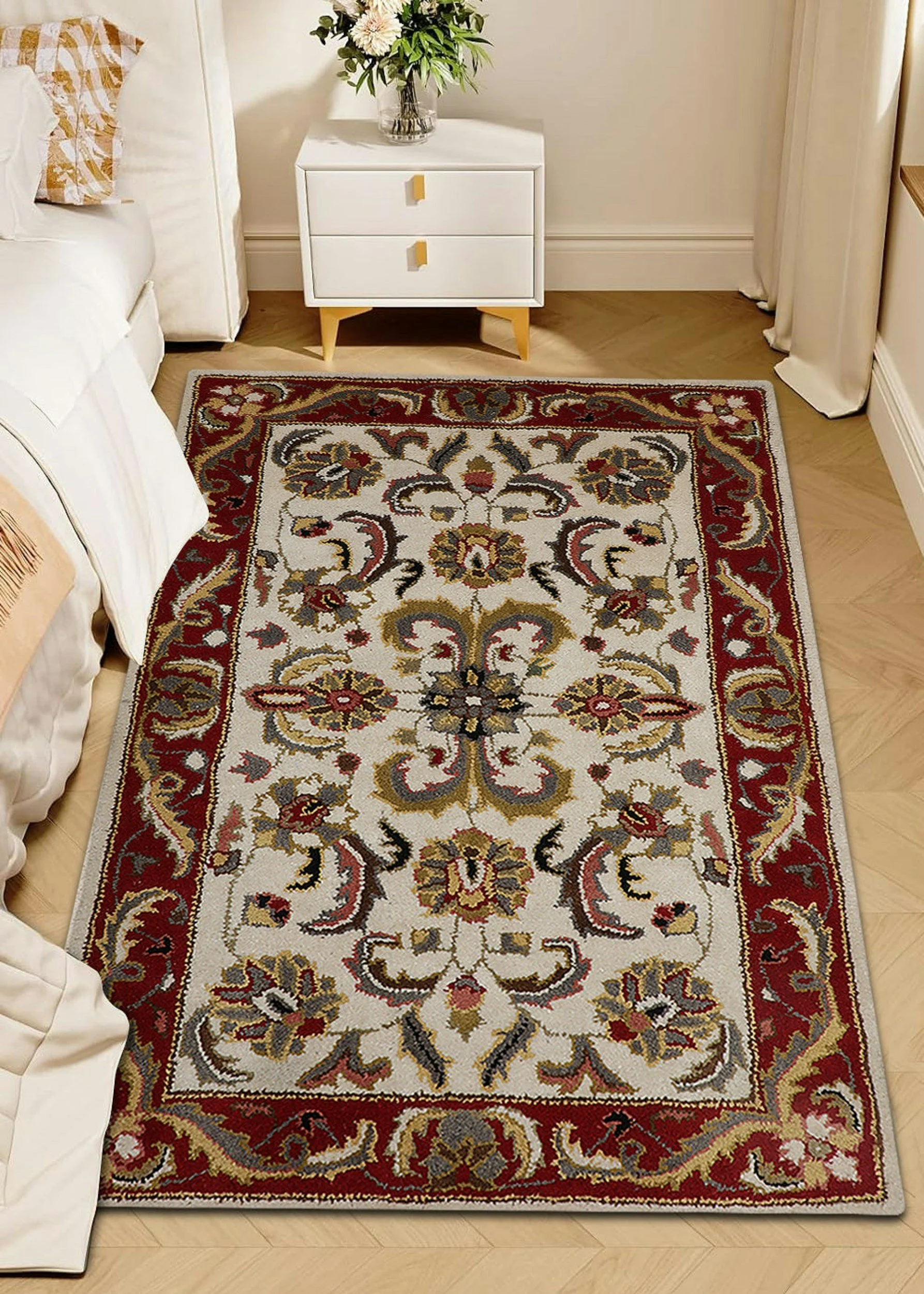
Photo Credit | Keshari Home
Sizing Is Where It Fails
A too-small rug doesn't make a room feel bigger. It makes the room read like a mistake is sitting on the floor that nobody's gotten around to. The furniture floats, nothing connects, and the whole space says for now even four years in.
Everyone knows this. It's in every rug article ever written.
Here's why people buy the small one anyway. The right size costs more. It's not on sale. It doesn't come in the color they wanted. So they take the eight by ten instead of the nine by twelve, tell themselves it'll be fine, and spend two years feeling faintly wrong about the room without tracing it back to the floor.
People already know rugs come in bigger sizes. They buy the small one anyway, for a completely different reason.
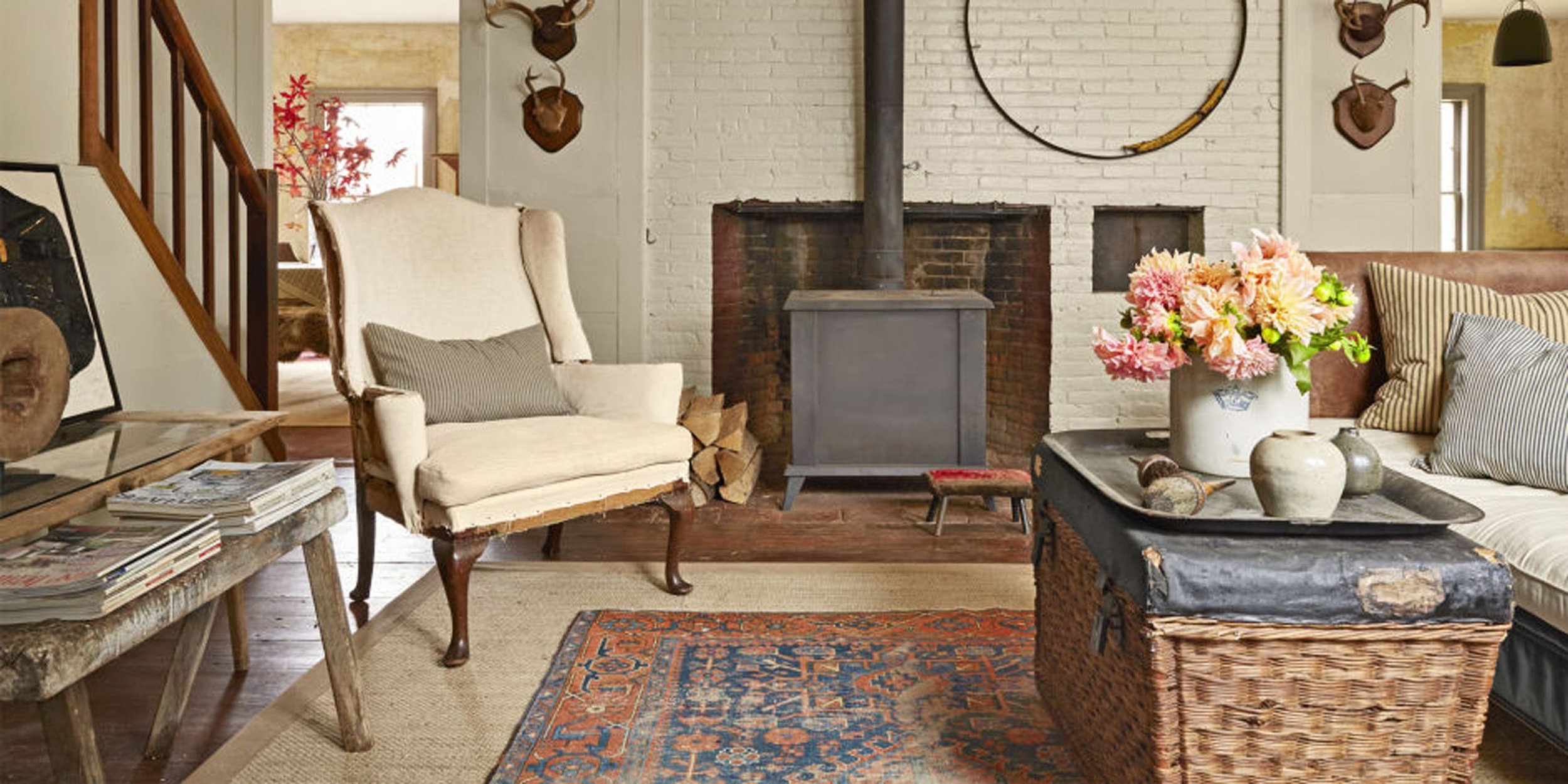
Photo Credit | Country Living
I Answered Anyway
I've been on the receiving end of that message more times than I can count. Clients, people who follow me, friends who know what I do and figure that makes me useful to have in the phone.
Sometimes I answered out of courtesy. Sometimes because it would've been strange not to. Sometimes because being blunt with somebody who hadn't asked for blunt felt like too much for a Thursday.
They wanted a verdict, I gave them one, and I told myself I'd helped.
I hadn't.
I don't do it anymore. Not out of coldness, out of arithmetic. A fast opinion costs me nothing and costs her another week of not deciding.
What I'd given them was one more thing to weigh against the other seventeen options still open.
The whole culture of asking, the group chat, the comments under a design post, the reddit thread, was never built to help anyone decide. It's built so you feel less alone while you're not deciding. Every opinion you gather is fresh evidence the choice is hard. One more voice that might disagree with the last one. One more reason the option stays open.

Photo Credit | CyrusRugs
What makes a room feel off is almost never the object you're looking at when you ask.
What Do You Value Here
Before the store, before the search bar, before you send anyone a link.
What do you value here? Your feet, your budget, how much you're willing to think about it, something you want to feel underfoot at seven in the morning before you're presenting yourself to anybody?
I ask this now. Most people have never been asked.

Photo Credit | Emily Henderson
The rug for the person who says my feet is a completely different rug from the one for the person who says my budget, and both are different again from the person who just wants it to look right without being able to say what right means yet. All three are fine answers. They're just not the same answer, and the store has no idea which one you are.
Skip that, and here's what happens instead. You end up on a sale, feel the countdown, mistake urgency for knowing, and buy. The rug is in your home. It's fine.
Fine is not the same as decided. The pieces that wander from room to room for years looking for somewhere to belong are almost always fine. Chosen toward whatever was convenient, or on sale, or approved in a group chat, and none of it was ever yours.
If you go vintage on the top layer, part of what you're buying is that the rug has stopped asking questions. It already found out what it is. New rugs take a while to do that. Some never do.

Photo Credit | The Property Lovers
If you follow the five steps and the room still doesn't sit right, that's what Design Mood is for. Two hours, one room, and we start with what you value rather than what you're looking at.
It's for the person who'd rather stop sending the link. If what you want is somebody to just tell you which rug, I used to do that over text, and it worked for about four days each time. I don't anymore, and I'd rather tell you why than take your money pretending I still would.