I've never had a client pick paint at 7pm in February
That's the hour they have to live in it.
Every color I've ever helped someone choose got picked the same way. Saturday morning. Coffee. Swatches taped in a row. The light doing its best possible impression of light.
I have never once had a client choose paint on a Tuesday in February at twenty to seven, overhead light on, dinner half made, the room looking exactly like itself instead of like a showroom.
(That's the version nobody photographs. It's also the one she has to live inside.)
You chose for the best three hours of the week and then went and lived in the other hundred and sixty.
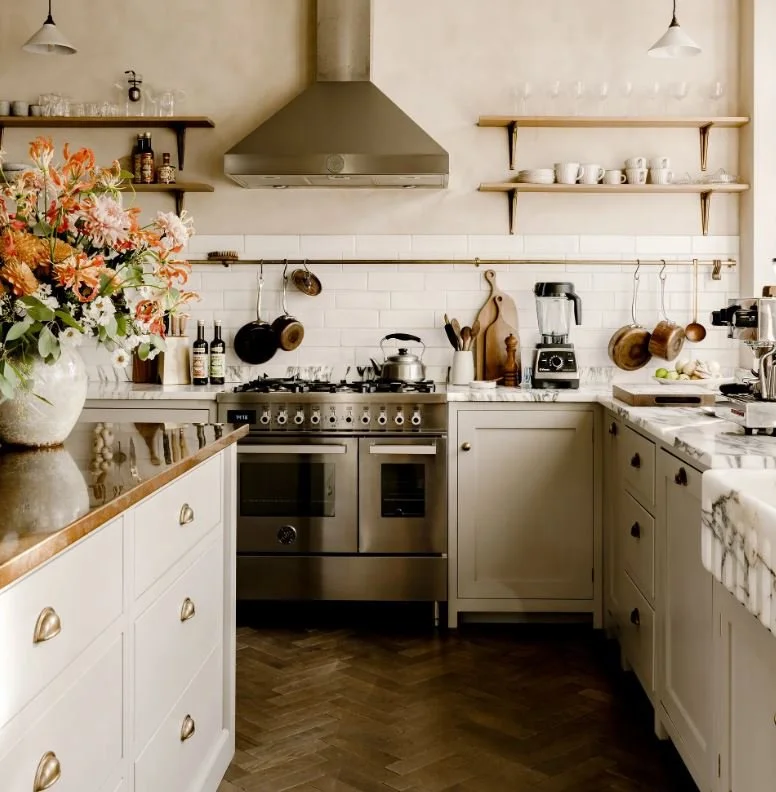
Image | House and Garden
The Color Changes on You
There is no color that is the same color all day.
Paint has a range, not a value. The pigment sits there doing nothing while the light does all the work, and the light changes hourly, seasonally, every time you flip a switch. The swatch didn't lie to you on Saturday. It told you the truth about one specific set of conditions, and then those conditions ended, the way they do around four.
The actual decision in front of you was never which color. It was which hours you were choosing for. Nobody presents it that way, because "pick the color that suits your light" sounds solvable, and "pick which version of your kitchen is the real one" sounds like work.
It is work. It's also about eight minutes of thinking, and it's the difference between a color that works and a Saturday you spend repainting.

Image | House and Garden
The Direction Decides Your Choice
The compass thing is real, I use it constantly, just not the way it usually gets handed out. Orientation doesn't tell you your color. It tells you what kind of choice you're facing.
North-facing is the strange privilege nobody appreciates. No direct sun, ever, so the light barely shifts all day. Cool and soft, and it stays that way. Painters have wanted north-facing studios for centuries for exactly this reason.
So a north kitchen is the one room where you actually can choose a color for the whole day. The tradeoff is that everything reads cooler and more muted than the chip promised, which is why stark whites go slightly clinical there, and why warm neutrals don't look nearly as warm as you're bracing for. They just look like the room finally has some blood in it.

Image | Pinterest
South-facing gets strong, direct, fairly consistent light, and colors land close to their true value. This is the room that can hold a deep green or a navy or a real terracotta without going cavelike. If your windows face south and you've been wanting to do something with some nerve, that's the room for it.

Image | House and Garden
East and west are where the actual decision lives. An east kitchen is gold at breakfast and cooling by three. A west kitchen is flat all morning and floods orange at six. These rooms genuinely have two personalities, and you don't have to serve both.
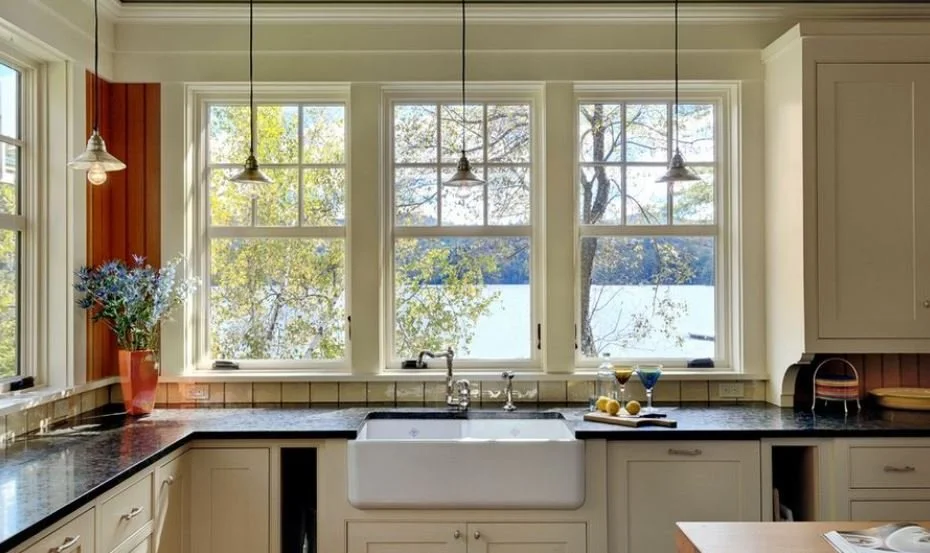
Image | Architecture Ideas
Ask when you actually use it. Up at six, gone by eight in the evening, design for morning, let the afternoon be whatever it wants. Cook at seven, that's your hour, and the west kitchen's fiery light is the condition that matters. Cooler tones, a sage, a pale gray-blue, meet it instead of shouting along with it.
If you genuinely use it hard at both ends, greige exists for exactly that, and only that. It's not exciting and it isn't supposed to be, a color that agrees to be unremarkable in every light rather than excellent in one. That's a legitimate choice. It's just a choice, and it costs you the excellent version.
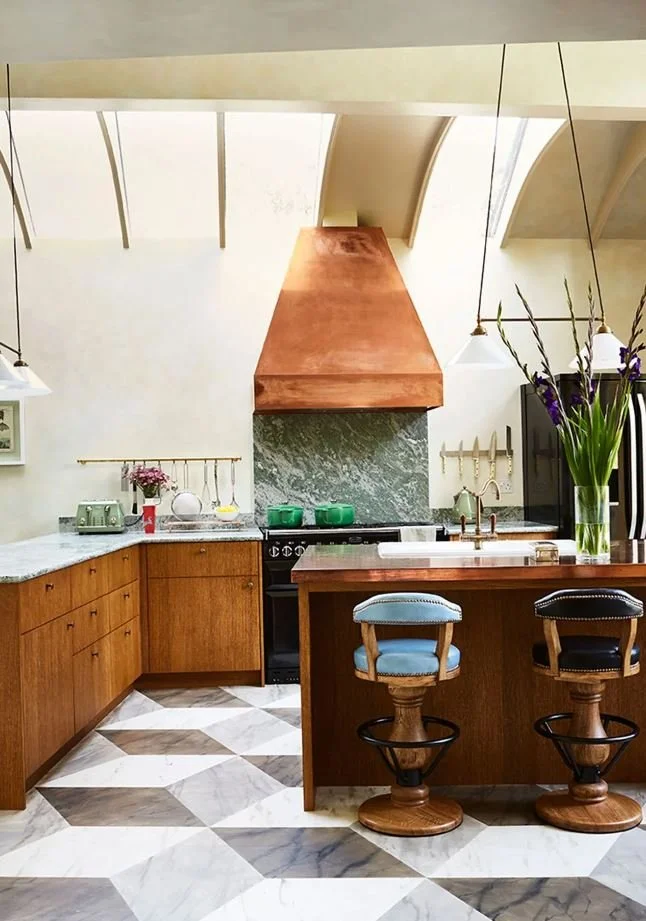
Image | House and Garden
The White Card is Lying to You
A paint chip on white card is being surrounded by nothing. Your eye reads color relative to whatever sits next to it, always, and it can't turn that off. Put the same beige next to your actual oak cabinets, your actual counter, your actual floor, and it becomes a different beige. Not metaphorically. Measurably.
Paint the sample on the wall it's going on, at least a foot square, next to the cabinets it has to live beside for the next nine years. Not on a card you hold up. The card is a control group, and you don't live in a control group.
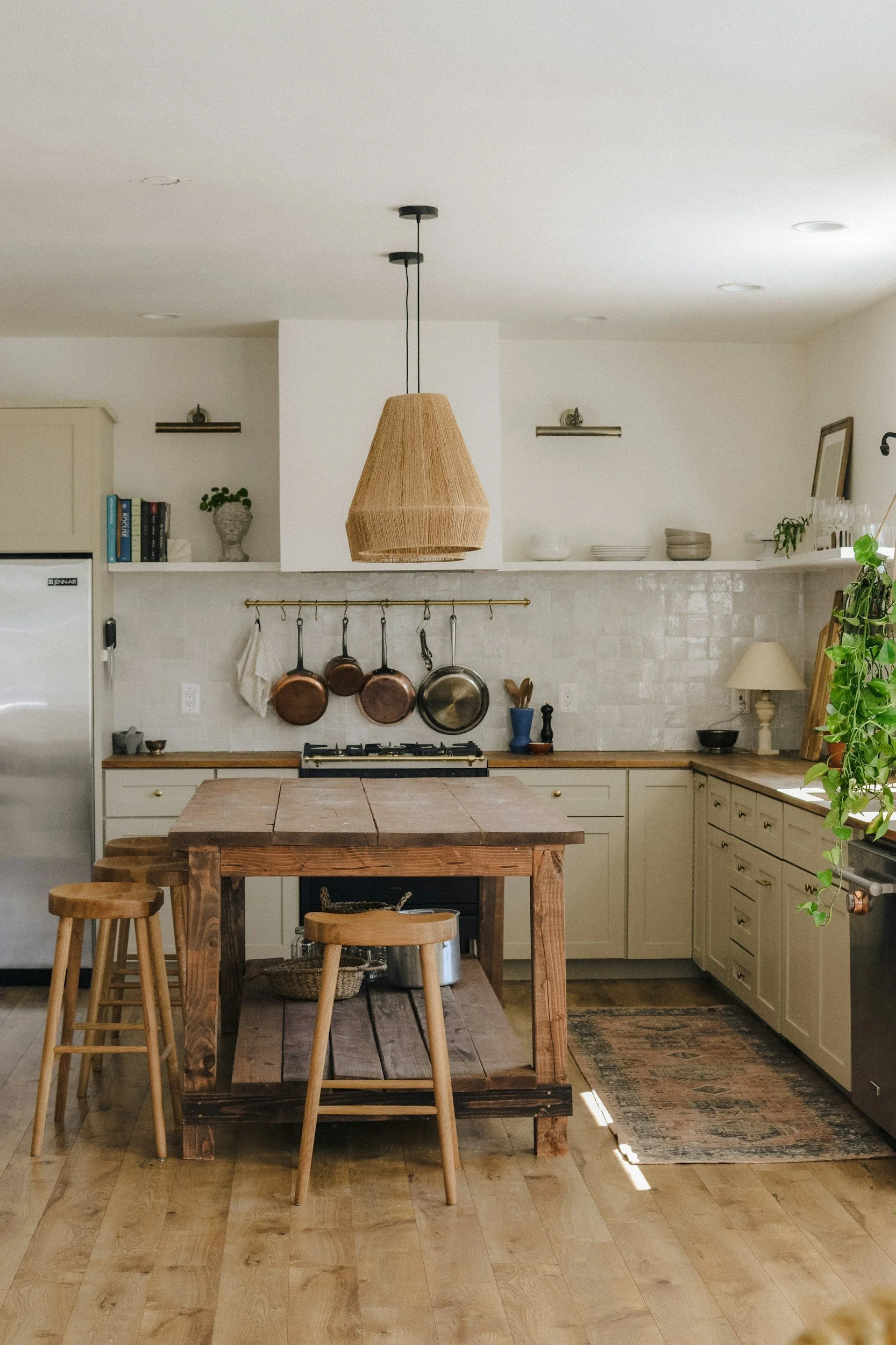
Image | SosyInteriors
Your Bulbs Aren't Neutral
You picked the color in daylight and then turn a light on for half the hours you're in there.
Anything under 3000K throws yellow, warming warm colors and muddying cool ones. Anything over 4000K throws blue-white, sharpening cool colors and draining warm ones. The CRI number on the box tells you how honestly the bulb renders color at all. Above 90, you're seeing something close to true. Below 80, you're deciding on a color that doesn't exist anywhere except under that bulb.
If the kitchen is mostly an evening room for you, test the sample at night, under the bulbs you own, with the lights you'll actually have on. That's the one test people skip, and it's the one that would have saved the Saturday.
Three Days Beats Three Hours
Give it three days, not three hours. Look at the sample when you wake up, at two in the afternoon, and at whatever hour you're normally standing there with something on the stove.
Then pick the hour that matters most, and choose for it, on purpose, knowing you're giving up the others.
The color never failed you last time. You just never met the version of the room that actually mattered, the one at quarter to seven with the overhead light on, and that's the one you're living inside for the next nine years.
If you've been in front of a paint swatch longer than a paint decision should take, that's usually not about the swatch. Design Mood is two hours, one room, and we start with the hours you're actually in it. It's for the person who wants to make the call herself and be done. If you'd rather hand the whole thing to someone and not think about it again, that's a real and reasonable want, and it's a different service than this one.