You're Capable. That Might Be the Problem.

You're not the kind of person who needs help.
You've always figured things out. Painted your own walls. Built the bookshelf from the tutorial. Spent a Saturday afternoon rearranging the living room until it felt close enough to done. You're resourceful. You finish what you start. You've never needed someone to hold your hand through a home project.
So why is there a bag of supplies sitting by the door that's been there since February?
Why is the bedroom almost done in a way that feels worse than before you started?
Why does the idea of opening Pinterest one more time make your chest tight instead of excited?
Nobody talks about this part. The part where being capable becomes the thing that keeps you stuck. Because if you can do it yourself, then not finishing feels like a personal failure. And asking for help feels like admitting you couldn't handle something that everyone else seems to manage in a weekend.
So you don't ask. You just live with the half-done version. The bag stays by the door. The room stays in between.

The stall isn't about what you don't know
Here is what I have noticed after years of working with people who are very good at doing things themselves. The projects that stall almost never stall because of ability.
The paint is bought. The tools are there. The vision exists. Sometimes the room is literally 80% done.
What's missing isn't a tutorial or another trip to the hardware store or a better YouTube video. What's missing is the confidence to make the last few decisions. The ones that feel final. The ones where you can't undo it with a coat of primer and start over.
Choosing the exact shade for the accent wall when you've already committed to everything around it. Hanging the art when the nail holes will be visible if you change your mind. Buying the one piece that finishes the room, knowing that if it's wrong, the whole thing unravels.
Those aren't skill problems. They are decision problems. And they don't respond to more research or more time or more effort. They respond to something you cannot give yourself when you've been staring at the same room for four months.
A different pair of eyes.
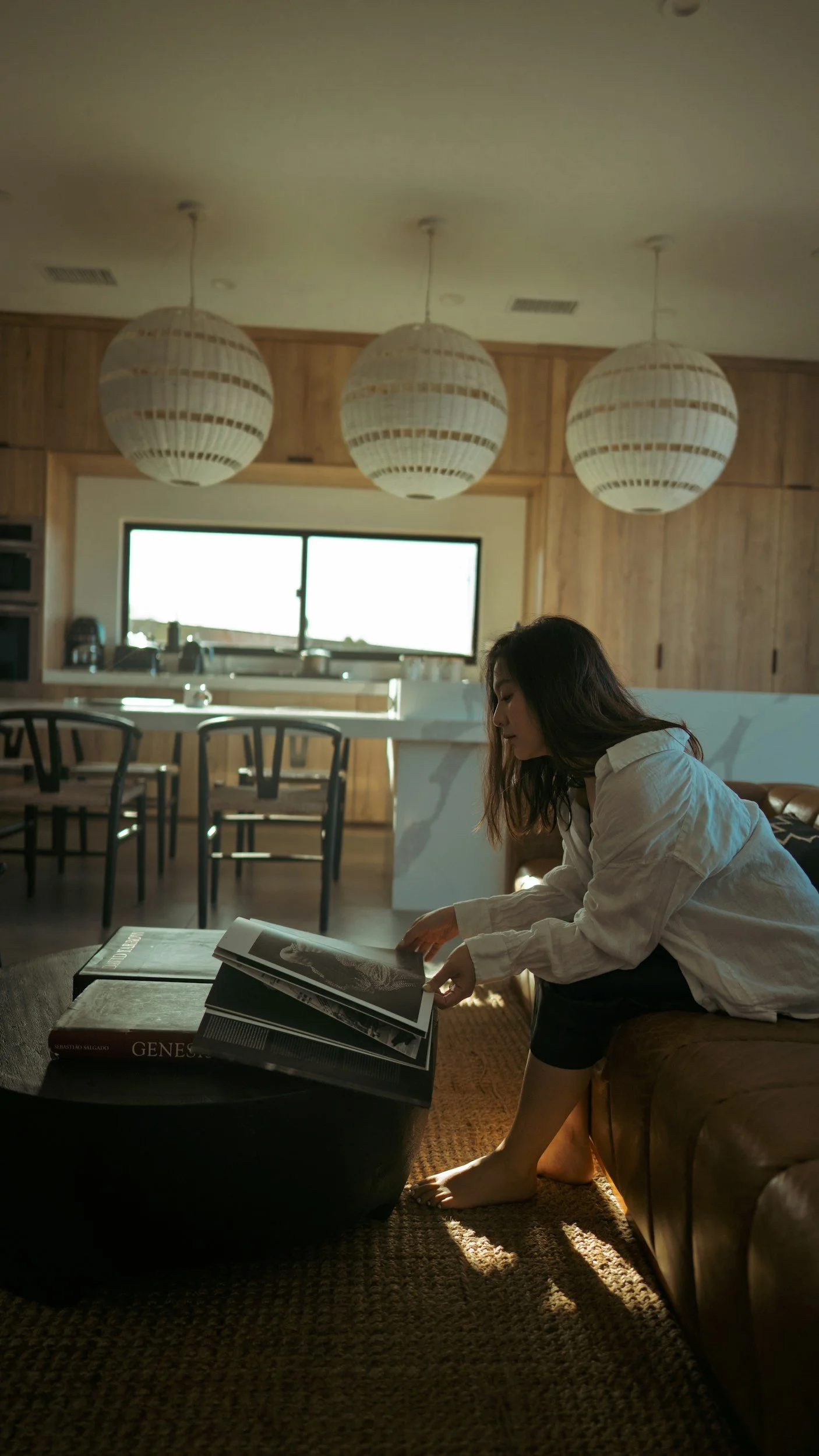
Why does the almost-done room feel worse than the original mess?
Before you started, the room was just a room. Imperfect but ignorable. You could walk through it without it asking anything of you.
Then you began the project. You invested time, money, energy, hope. You made visible progress. And now the room is in between. Not what it was. Not what it's going to be. Stuck in a limbo that somehow feels more unsettled than where you started.
Every time you walk past it, the room reminds you that you began something you haven't finished. And because you're someone who finishes things, that reminder carries weight. Not just visual weight. The personal kind. The kind that says: you should be able to do this. What is wrong with you?
Nothing is wrong with you.
The room crossed from a project into a decision somewhere in the middle, and nobody told you those require entirely different things. Projects run on energy and momentum. You can push through a project on a determined Saturday with enough coffee and the right playlist. Decisions don't work that way. Decisions need distance. They need perspective. They need someone who isn't standing inside the problem trying to see the whole picture.
You've been trying to push through a decision with project energy. That's why it stalled. It was always going to stall.
What happens when you know something too well
There is a phenomenon in cognitive psychology that researchers call the Einstellung effect. It describes what happens when a person's first approach to a problem, drawn from prior experience, actively prevents better solutions from being considered. The more familiar you are with something, the more likely your brain is to keep running the same approaches, even when those approaches have stopped working.
In other words: expertise can become the thing that keeps you stuck.
You have been inside this room long enough that you cannot see it anymore. You have developed so many opinions about what's wrong that they've started canceling each other out. You have looked at the wall so many times the color has stopped meaning anything. The accumulated weight of your own thinking has become the obstacle.
This is not a character flaw. It is a documented feature of how human cognition works when we stay too close to a problem for too long. The solution is not more effort from the same vantage point. It is distance. A different position entirely.
Someone who has never been inside your spiral can see what you've stopped being able to. Not because they're smarter. Because they arrived this afternoon.

What "getting help" actually means for someone like you
When you've been doing everything yourself, asking for help conjures a specific image. Someone coming in, taking over, handing you a plan you didn't create for a room you know better than anyone.
That is not what this is.
The kind of help that works for someone who is capable and invested and stuck is not someone doing the work for you. It's someone sitting with you in the decision you've been circling. Asking the questions you haven't thought to ask yourself because you've been too busy trying to answer the ones you already have. Noticing the thing your eye keeps returning to that you've been dismissing because it feels too simple, too obvious, too much like you already knew.
Two hours. Not to redesign your room. Not to hand you a mood board built from someone else's idea of your taste. Just to close the decision that has been keeping the bag by the door and the room in that particular purgatory where it's worse than it was before you started because now you can see exactly what it's supposed to become and you're not there yet.
That is what breaks the stall. Not more research. Not more motivation. Not a better tutorial. Someone who can see the room without three months of accumulated doubt sitting on top of it.

Why capable people are the last to ask and the first to benefit
Here is the thing about capable people. The issue was never ability. It was proximity. You are too close. You have been inside this decision so long you can no longer tell the difference between genuine uncertainty and exhaustion. Between a real design question and a fear of committing. Between not knowing what's right and knowing exactly what's right but not trusting yourself enough to act on it in case you're wrong. Someone from outside that spiral can see the difference in about ten minutes. Not because they're cleverer. Because they're not carrying the weight of every decision you've reconsidered since February. Asking for help with your home is not admitting you failed at the project. It is recognizing that the skill set that got the room 80% done is not the same skill set that closes it. Starting and finishing require different things. You are brilliant at starting. You've proven that repeatedly. Finishing needs a different conversation. A shorter one than you think.
If the bag is still by the door
You know the one. The hardware. The fabric samples. The paint chips you've been living with so long they've become part of the decor. Pick one thing from it. Just one. Hold it up in the actual room, under actual light. Don't research it. Don't compare it to the fourteen other options you've been rotating through.
Just look at it and notice what your body does before your brain starts building arguments.
Does something open? Does something settle? Or does something resist? Does your stomach do the thing it does when you already know?
That response, the one that happens in the first two seconds, has been there the whole time. The bag has just been waiting for you to trust it.
If you're ready to stop carrying the half-done room and close the decision that's been stalling everything else, that's exactly what Design Mood is for. Two hours. One decision.
The bag finally leaves the door.
And if you've been here before, you're not alone in that either.