You Changed. Your Home Didn't. Now What?

Image | Unsplash
Something happened.
Maybe it was sudden. A relationship ended. A diagnosis came. Someone left the house and isn't coming back. Or maybe it was slow. A career shift that changed how your days feel. A kid who grew up and moved out while the room stayed exactly the same. A version of yourself that quietly evolved while every surface in your home kept representing the old one.
The house didn't change. You did.
And now you walk through it every day feeling a friction you can't explain to anyone because the house looks fine. Nothing is broken. Nothing is ugly. The furniture still works. The layout still functions. But something in you tightens every time you turn the corner into the living room, or open the bedroom door, or stand in the kitchen that was designed for a life you're not living anymore.
You might think you need to redecorate. Or renovate. Or move.
You might just need to let the house catch up to who you became while it wasn't looking.

Image | Pinterest
Why Life Transitions Show Up in Your Living Room
Nobody warns you about this part.
They tell you that grief shows up in your body. That stress shows up in your sleep. That change shows up in your relationships.
Nobody tells you it shows up in your furniture.
But it does. Because every object in your home was chosen by a specific version of you, for a specific version of your life. The couch you picked when you were a couple. The kitchen you organized around a family that had different needs. The bedroom that was decorated to impress someone who's no longer there. The home office you set up for a job you've since outgrown.
Those decisions made sense at the time. They weren't wrong. They were accurate. For then.
The problem is that you kept living in them after "then" ended. And now the house is a museum of decisions made by someone you used to be, in a life you used to live, for reasons that no longer apply. And the low-level discomfort you feel every day isn't about design. It's about the gap between who lives in this house and who this house was built for.
They're not the same person anymore. And until the space acknowledges that, it will keep feeling slightly, persistently, namefully wrong.

Image | Decorilla
The Rooms That Hold On Longest
Not every room carries transition weight equally.
The bedroom is usually the heaviest. Because it's the most private. The most intimate. The room where the old life is most embedded in the details. The side of the bed that's still "theirs." The nightstand arrangement that made sense for two people. The sheets you bought together. The mirror that watched a different version of you get dressed every morning.
People will repaint the living room before they touch the bedroom. Because the living room is public. It's easier to change what other people see. The bedroom requires changing what you see when you're alone. And that's a different kind of courage.
The kitchen is the second heaviest. Because it's organized around routines that may no longer exist. Cooking for four when there are now two. A coffee setup designed for morning rituals that have completely changed. Cabinets full of things purchased for a household that looked different six months ago.
The room that was "theirs." The kid's room. The guest room that used to be an office. The space that had a clear purpose tied to a specific person, and now that person is gone or the purpose has evaporated, and the room just sits there, full of someone else's energy, waiting for you to decide what it becomes next.
You don't have to tackle all of them. You just have to start with the one that pulls at you the hardest.

Image | Unsplash
Why Redecorating Alone Won't Fix This
The instinct, when a home feels wrong after a life change, is to do something visible. New paint. New curtains. Rearrange the furniture. Buy something that represents the "new you."
Sometimes that helps. Often it creates a room that looks different but feels the same. Because the aesthetic changed but the underlying decisions didn't.
The throw pillows are new. But the couch still faces the direction it did when there were two people sitting on it. The bedroom got a fresh coat of paint. But the furniture layout still assumes someone is sleeping on the other side. The kitchen was reorganized. But it's still stocked for a family size that no longer exists.
Surface changes applied to unexamined decisions are wallpaper over a crack. The crack isn't structural. But it's there. And you'll feel it every time the light hits the wall at the wrong angle.
What actually helps is starting further back. Not with "what should this room look like now?" but with "what does this room need to do for the person I am today?"
That question sounds simple. It isn't. Because answering it requires acknowledging the transition. Accepting that the previous version of this room was right, for someone you're not anymore. And giving yourself permission to let that version go without guilt or nostalgia or the feeling that changing it means erasing something that mattered.
It mattered. And it can matter in your memory without continuing to occupy your walls.
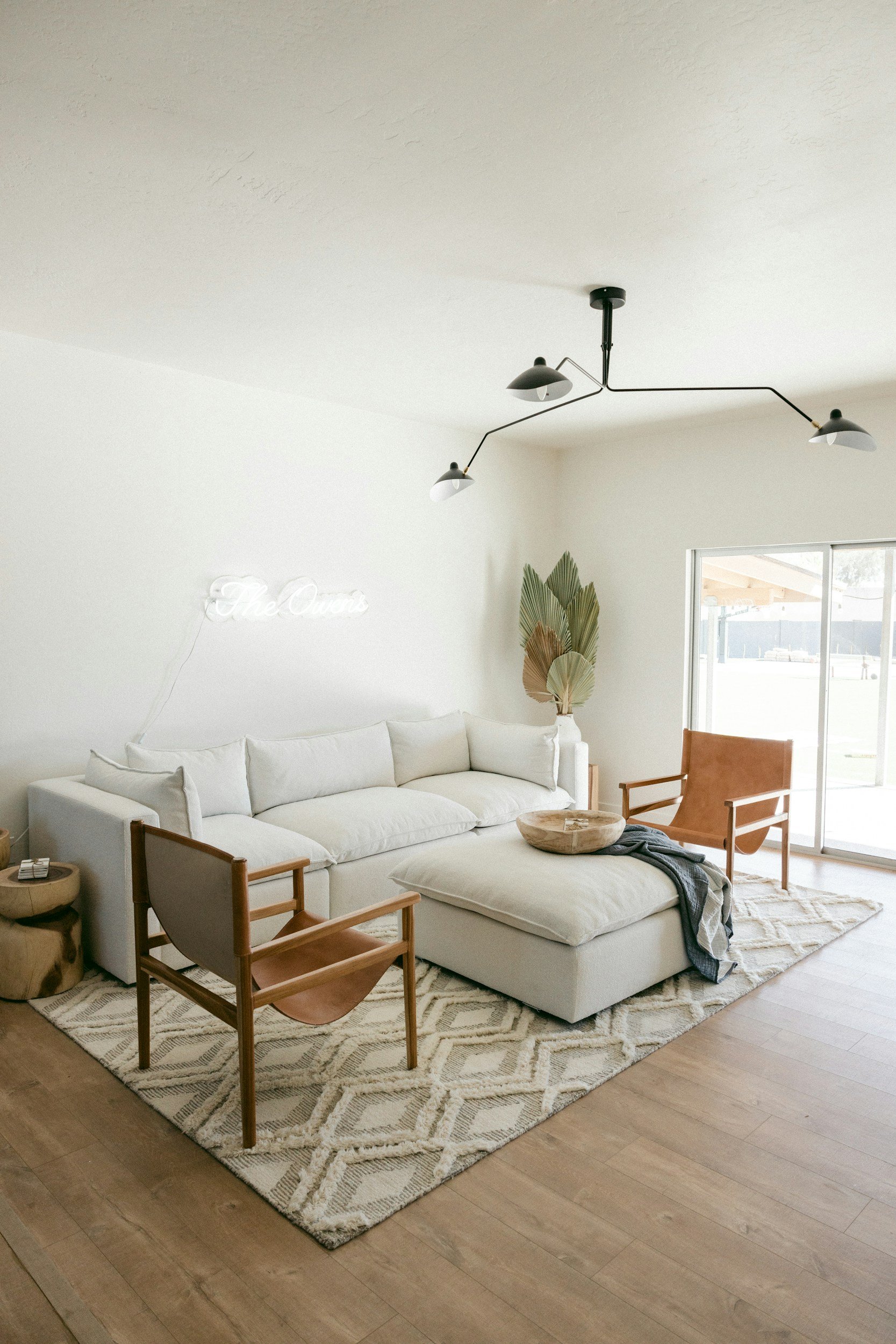
Image | Unsplash
The Small Moves That Signal a Shift
You don't have to renovate. You don't have to spend money. You don't even have to decide what the room becomes yet.
Sometimes the most powerful thing you can do after a life change is one small physical act that tells the house, and yourself, that things are different now.
Move the furniture away from the arrangement that was designed for a life that ended.
Take the second nightstand out of the bedroom. Not forever. Just to see what it feels like to sleep in a room arranged for one person instead of two.
Empty one shelf completely. Leave it bare. Let the absence sit there for a week. Notice if it feels like loss or like relief. That answer tells you everything about whether the room needs filling or freeing.
Change where you sit. If you've been sitting in the same spot on the couch since before everything shifted, try the other end. It sounds trivial. It isn't. Your body has spatial habits that are tied to who you were in this room. Breaking one of them, even a small one, signals to your nervous system that the rules have changed and that's allowed.
These aren't design decisions. They're permission slips. Small, physical ways of telling your home that the person living here now has different needs. And that those needs matter enough to act on.

Image | Unsplash
The Question Nobody Asks You (But Should)
Everyone asks how you're doing. Nobody asks how your home is doing.
And that's a strange omission. Because you spend more time inside your home than anywhere else. You wake up in it. You grieve in it. You rebuild in it. You sit on the couch at 9pm trying to figure out what comes next, and the room is either supporting that process or quietly undermining it with every surface that still belongs to before.
The question that matters isn't "what style do you want?" or "what's your budget?" or "have you considered a gallery wall?"
The question is: does this room know who lives here now?
Not who lived here last year. Not who's expected to live here someday. Right now. The person sitting in it tonight, carrying whatever they're carrying, needing whatever they need.
If the room doesn't know, it can learn. But someone has to introduce you. Sometimes you need help making that introduction because you're still getting to know the new version yourself.

Image | Unsplash
Your Home Can Hold the Transition. It Just Needs Permission.
A home isn't finished when everything matches. It's finished when nothing in it is arguing with the life happening inside it.
After a major change, that alignment breaks. Not because the home failed. Because the life inside it moved and the rooms didn't move with it.
That's not a crisis. It's an invitation. To look around with honest eyes and ask what still belongs, what needs releasing, and what the space needs to become for the person who lives here now.
You don't have to know the answers yet. You just have to be willing to stand in the room and ask the questions. That's where every good decision starts.
And if standing in that room alone feels like too much right now, you don't have to. That's what the session is for. Two hours. One room. One decision that tells your home something has changed. And that it's allowed to change with you.