The Earthy Casita:
Blank white walls. Strong taste. Zero confidence in it.
You know that apartment.
The one that's technically ready for guests but nobody's booking it. White walls. Basic furniture. A layout that functions but has absolutely nothing to say. The kind of space someone scrolls past on Airbnb without even knowing why, it just doesn't stop them.
That's where this started.
The owners had converted their ADU into a rental. It was clean, it was livable, it was… blank. And the bookings reflected that. Nothing was wrong with it. But nothing about it made anyone want to be there either.
Here's the thing though, the owners had taste. Real taste. The kind that notices the weight of a ceramic bowl and cares about the color of a linen edge.
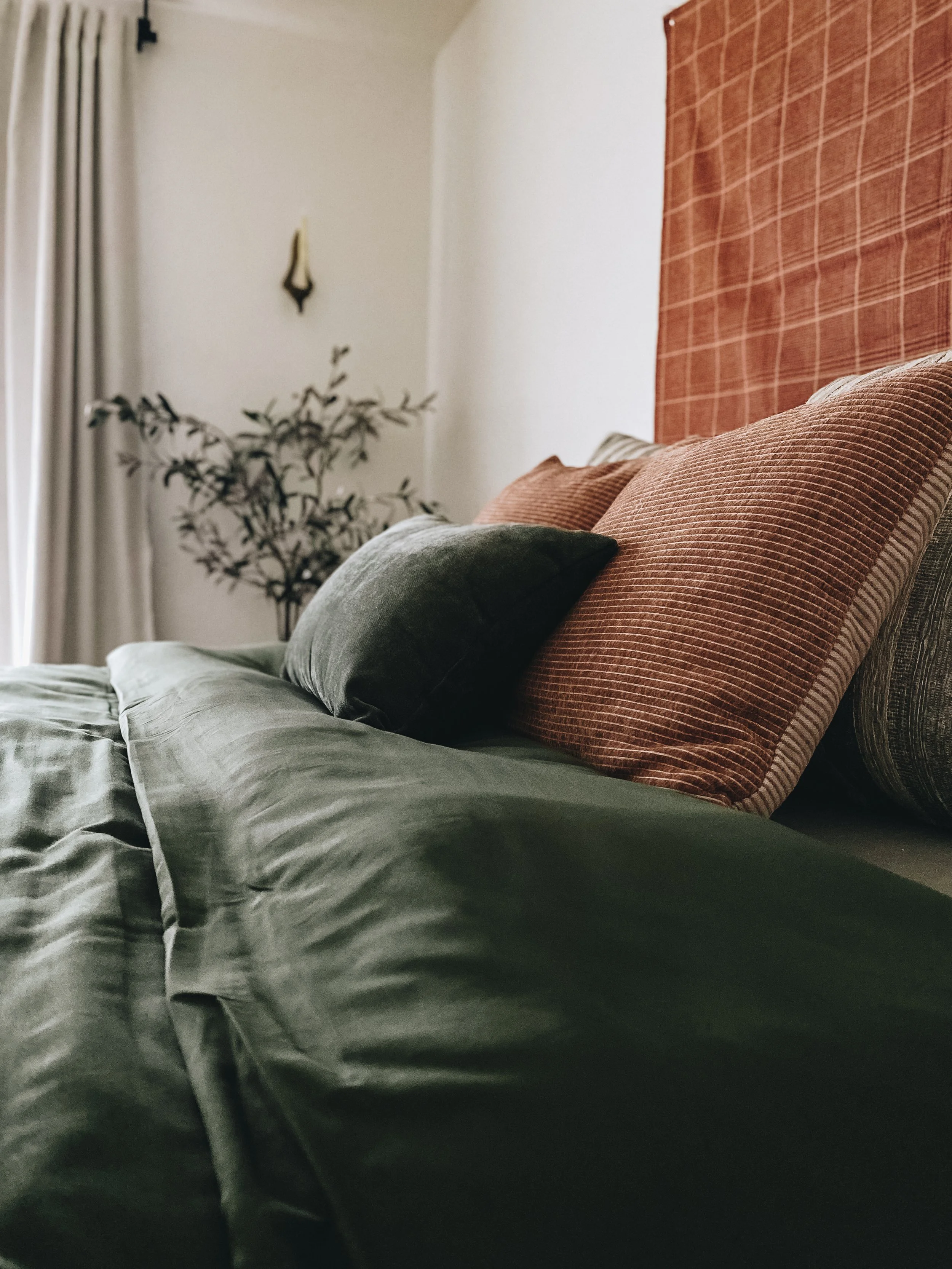
They wanted warmth, earthy, textured, Spanish-influenced warmth. Terracotta and olive and things that look like they've been somewhere before they arrived.
They knew all of this.
They just couldn't make it happen. Because every time they got close to a decision, something pulled them back. Is terracotta too much for a rental? Will guests hate it? What if it doesn't photograph well? What if we spend the money and it looks like we're trying too hard?
So the white walls stayed blank. For months. And the listing stayed buried.
I didn't pick a single thing.
I need you to hear that, because I think it's the most important sentence on this page.
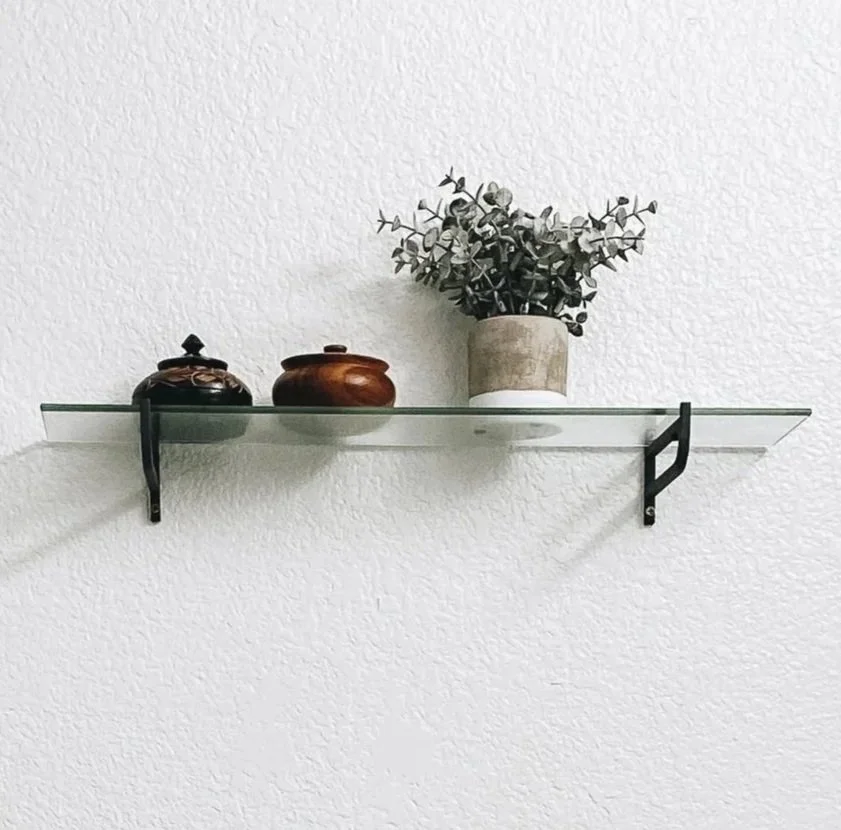
They picked every piece. They decided what stayed and what left. They chose the textiles, the tones, the objects on every surface. They styled the shelves. All of it, theirs.
What I did was hold the space while they figured it out. I asked questions that cut through the spiral. I pointed at the thing their eye kept going back to and said you've looked at that three times now, what is it about that one? I noticed when they were choosing from excitement and when they were choosing from exhaustion, and I called it.
And when they started to wobble halfway through, when the old voice crept back in saying maybe we should just keep it neutral, it's safer , I didn't argue. I just asked: safer for who? The guests who'll forget this place by checkout? Or for you, because deciding feels like risk?
They went with the terracotta. Not on the walls, the walls stayed white. On everything else. Textiles. Ceramics. Warm wood. Second-hand pieces that brought the warmth the walls weren't going to give them.
And suddenly the white wasn't empty anymore. It was the clean canvas that let everything they chose come together.
Here's what we didn't do: we didn't paint a single wall.
The white stayed. Every builder-grade surface stayed. We didn't gut anything, didn't renovate anything, didn't spend money changing the bones of a space that was already structurally sound. It didn't need new bones. It needed a personality.
What we did was work with what was already there, and go hunting for what was missing.
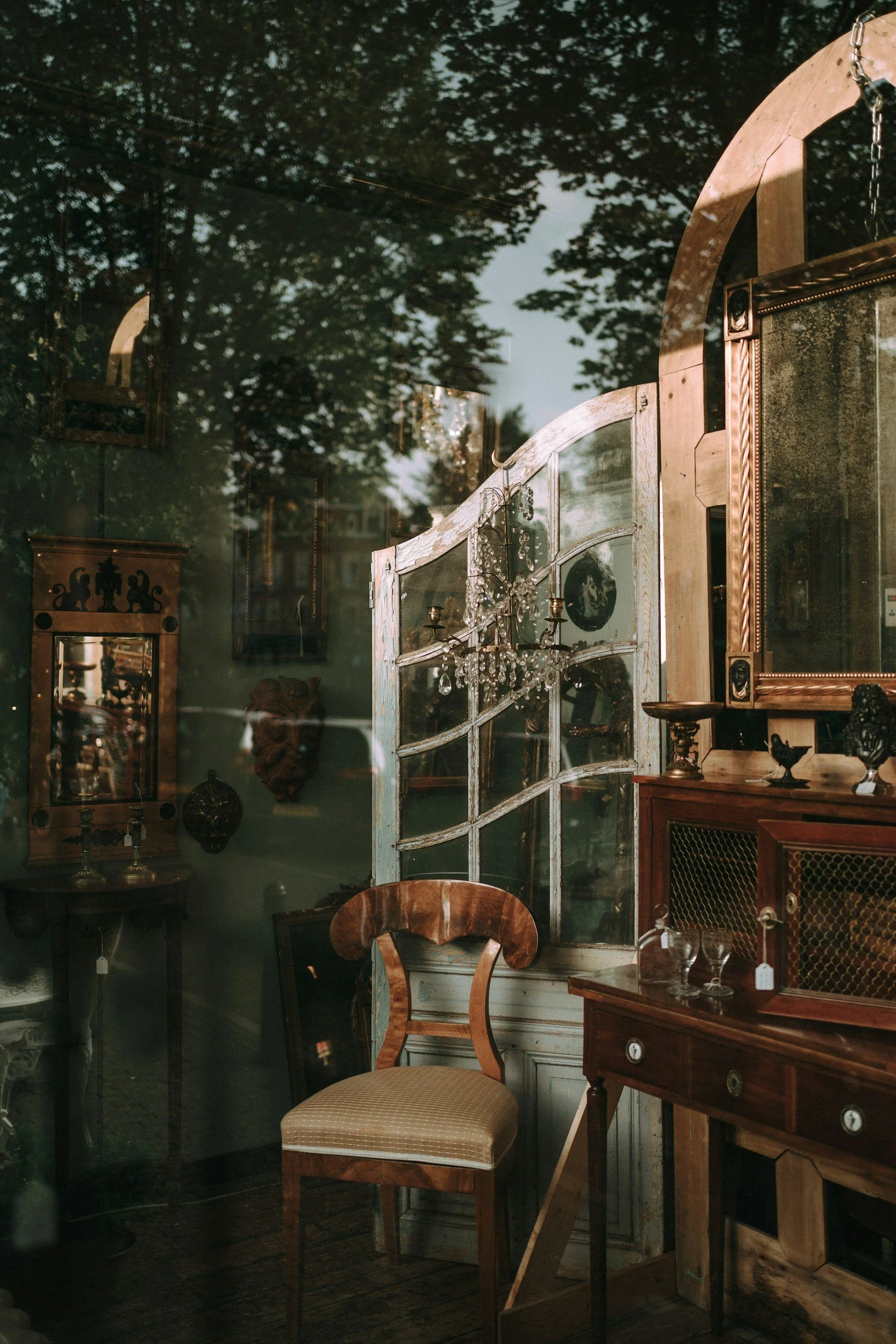
We went second-hand shopping together. Not browsing online. Together, in person, walking through thrift stores and vintage shops, picking things up and putting them down and talking about why one ceramic bowl stopped them and another didn't. That conversation is where the real work happens. Not in a mood board. In a dusty aisle holding something that costs twelve dollars and feeling your chest say yes, that one.
The white walls became a canvas instead of a void the moment we stopped seeing them as a problem and started layering warmth against them.
Warm textiles. Olive tones in the soft goods. Vintage wood that had lived somewhere else before it got here, and was better for it.
Most of what they already owned stayed. We just edited. Moved things. Removed what was taking up space without earning it. Gave the pieces that mattered room to breathe instead of competing with filler that was only there because an empty shelf felt like a failure.
Every single decision ran through one filter: does this make being here better, or is it just filling a gap?
If it was filling a gap, it didn't come home.
I should be honest with you about something.
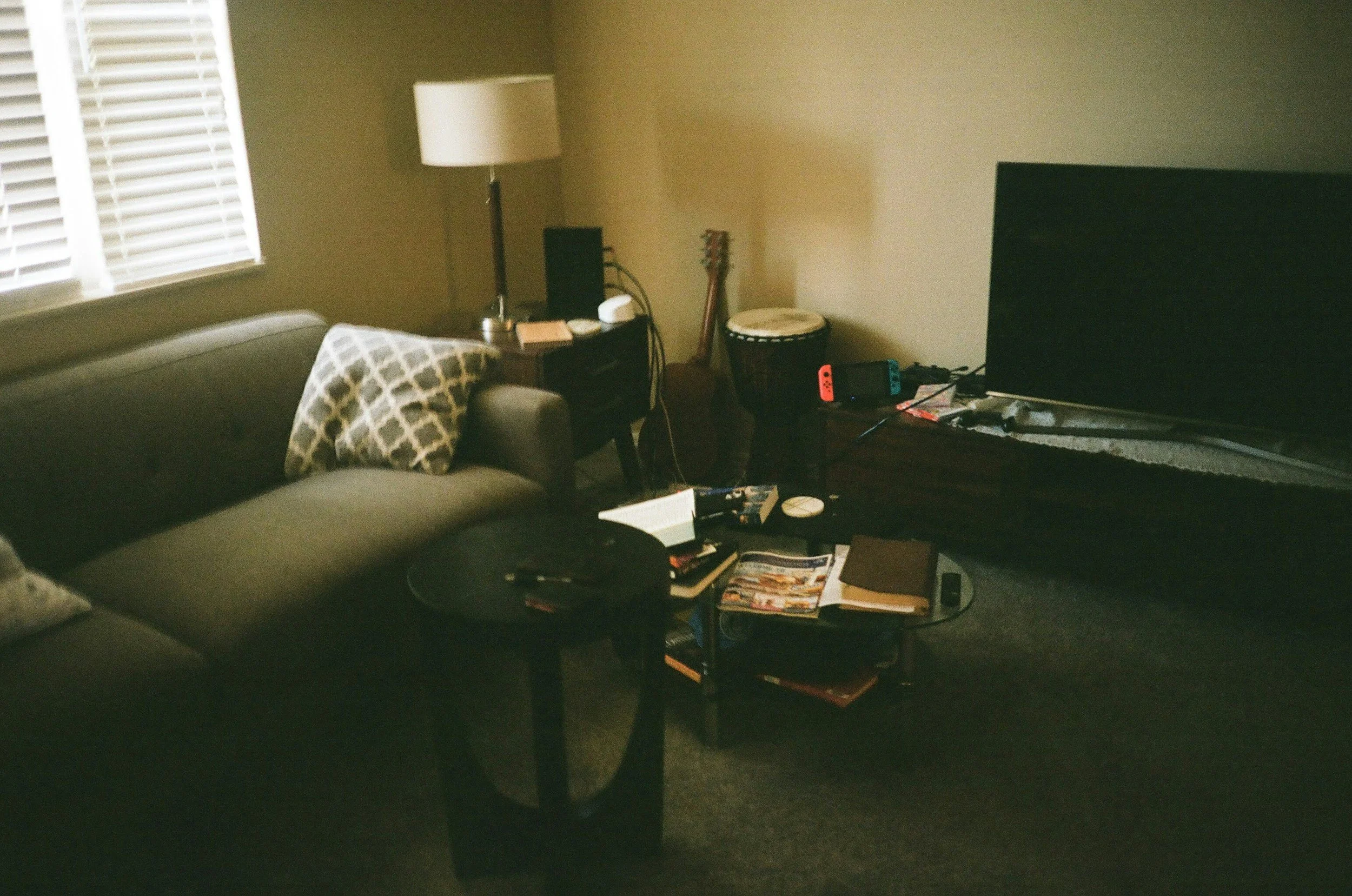
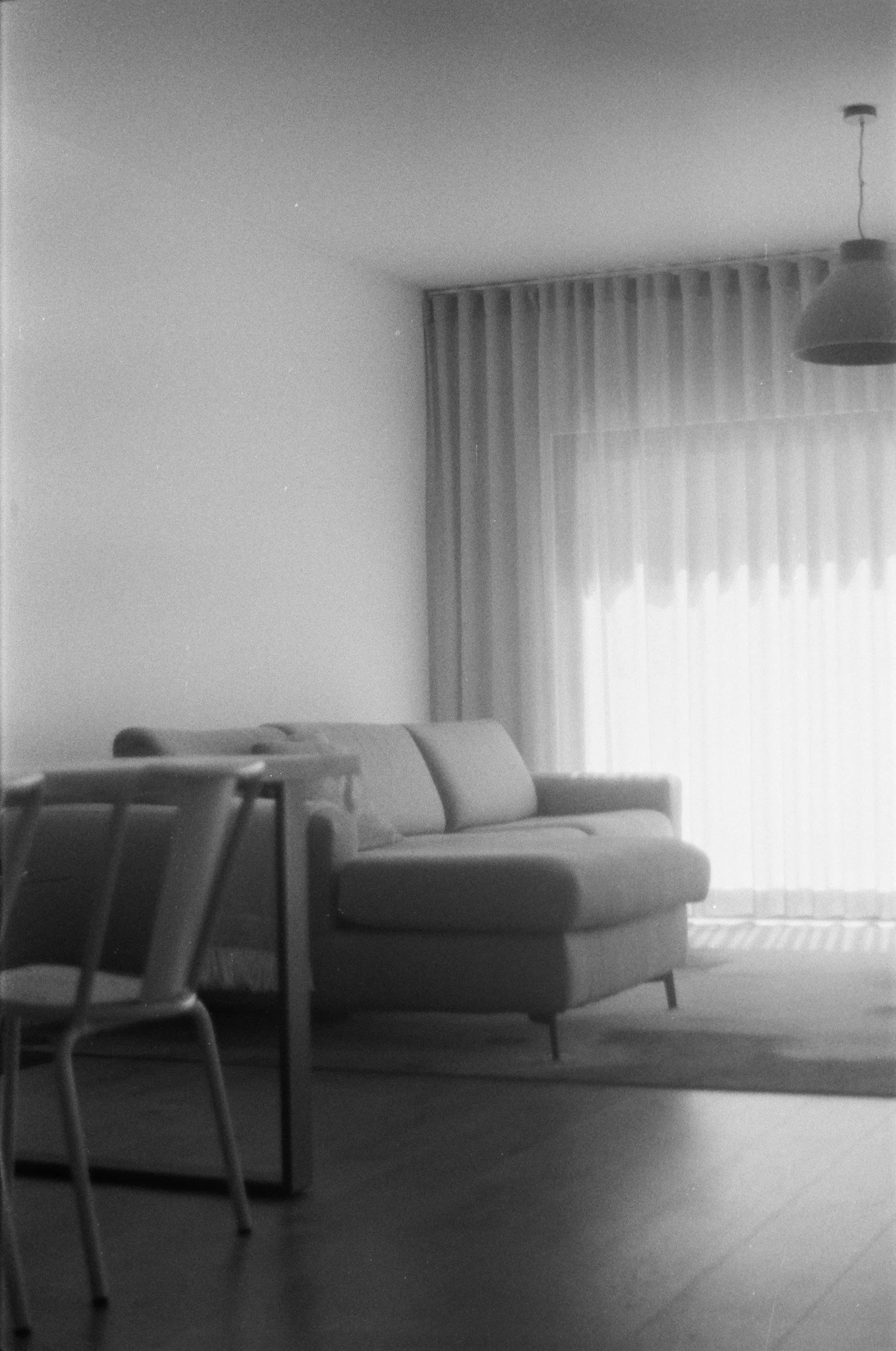
These aren't styled. There was no photographer. Nobody moved the throw pillow two inches to the left or waited for golden hour. This is what the apartment actually looks like when real people are actually living in it.
Some designers would never show you this. They'd wait for the shoot. They'd stage the fruit bowl and hide the remote control and make it look like a place where humans don't actually exist.
I think that's exactly the wrong way to prove the work.
Because if a room only looks good when someone performs it for a camera, the decisions inside it didn't hold. If it looks like this on a random Tuesday when nobody's trying, they did.
The listing went from invisible to booked.
Not because they hired a photographer or rewrote the description or dropped the price. Because the space finally had something to say. Guests started using words like "charming" and "intentional", words people don't use about a rental unless something about the space made them pause and actually feel something.
Before, it was a clean white box that blended into every other Airbnb listing in the area. Now it had personality. Now it had charm. Now it was the kind of place someone screenshots and sends to a friend saying we should stay here.
Same bones. Same walls. Same square footage. Completely different energy because every object in it was chosen on purpose by people who finally stopped being afraid to show their taste in a space other people would see.
But here's what changed more than the apartment.
The owners stopped texting me. Not in a bad way. In the best way. They stopped sending screenshots asking what do you think of this one? They stopped needing a second opinion on every throw blanket and candle holder. They started making decisions on their own, for rooms I'd never seen, in contexts we'd never discussed, and standing behind them.
That's when I understood what I was actually doing.
I wasn't designing their space. I was helping them find a filter they already had and trust it enough to use it without me.
I didn't have a name for that yet. It was years before I'd call it a True Filter or build it into a method or write it onto a PDF that someone could carry in their pocket. But this ADU, this small white Airbnb with two owners who had gorgeous taste and absolutely no faith in it, is where everything I do now started becoming real.